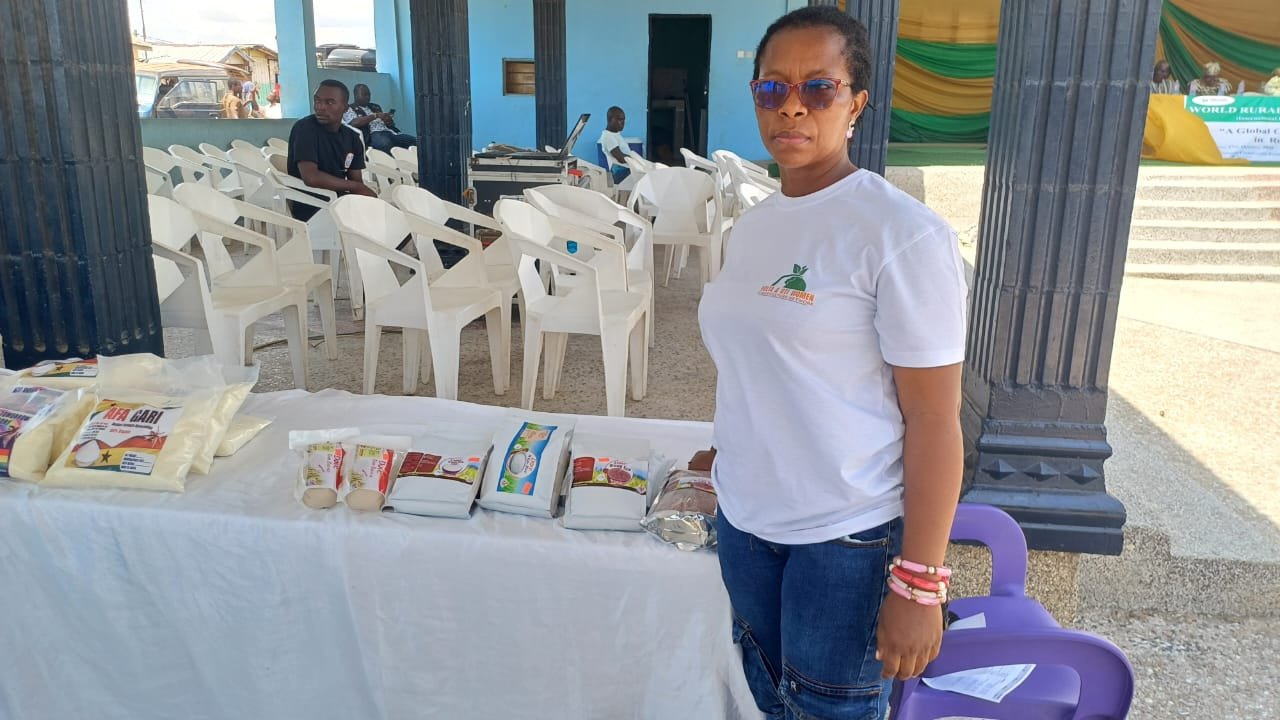
Rural Women in Volta, Oti Seek Support to Compete with Imported Rice
Saraphine Obrotey, Vice Chairperson of the Gamesu Women Rice Farmers Association and a member of Volta and Oti Women in Agriculture (VOWAN), has called for improved access to land, affordable credit, agricultural inputs and modern farming support for rural women engaged in rice production in the Volta and Oti regions.
She has also called for measures to reduce the challenges posed by imported rice to local producers, stressing the need to strengthen the competitiveness of locally produced rice and improve the livelihoods of women farmers.
Speaking on the topic “Rice Production by Women in the Volta and Oti Regions of Ghana,” under the theme “A Global Call to Support Women in Rural Areas,” Madam Obrotey highlighted the contributions of rural women to agriculture and the need for stronger institutional support to improve their productivity and incomes.
She said women play a critical role throughout the rice value chain, from planting and weeding to harvesting, processing and marketing, but continue to face challenges that limit their productivity and contribution to food security.
Access to Land and Finance
Madam Obrotey identified access to land as one of the major challenges confronting women in rice production.
She called for measures to ensure that women farmers have fair opportunities to access and use land for agricultural activities. She also stressed the importance of affordable credit and access to quality seeds, fertilisers and other essential farming inputs.
She noted that inadequate access to these resources could prevent women farmers from expanding their operations, adopting improved farming methods and increasing production.
She expressed hope that the Women’s Bank would help address some of the financial challenges facing women farmers by improving their access to funding and other forms of financial support.
She said accessible financing would enable women rice farmers to invest in their farms, improve production and strengthen their capacity to compete in the market.
Imported Rice Poses a Challenge
The VOWAN member also highlighted the challenges imported rice poses to local rice farmers, calling for measures to reduce the difficulties local producers face in competing with imported varieties.
She stressed the importance of strengthening locally produced rice through improved production, processing, packaging, branding and marketing.
According to her, supporting local farmers to produce quality rice and access reliable markets would help improve their competitiveness and create better economic opportunities for rural women.
She called for greater support for the local rice value chain to ensure that women farmers can earn better incomes from their work and contribute more significantly to Ghana’s food security.
Need for Training and Modern Farming Methods
Madam Obrotey called for increased investment in agricultural training and extension services to equip women rice farmers with the knowledge and skills needed to improve productivity.
She highlighted the importance of training in climate-smart agricultural practices, soil fertility management, pest and disease control, harvesting techniques and post-harvest handling.
According to her, access to practical training and appropriate technology would help women farmers improve the quality and quantity of their produce while reducing avoidable losses.
She emphasised that agricultural extension officers and researchers must work closely with women farmers to ensure that new knowledge and farming techniques are accessible and applicable to their needs.
Infrastructure and Market Access
The Vice Chairperson of the Gamesu Women Rice Farmers Association further underscored the need for better agricultural infrastructure to support rice production in the Volta and Oti regions.
She identified inadequate storage facilities, processing equipment, irrigation systems, transportation infrastructure and access to markets as issues requiring attention.
She said improvements in these areas would help women farmers preserve their produce, reduce post-harvest losses and obtain better returns from their labour.
Madam Obrotey also stressed the need to strengthen the processing, packaging, branding and marketing of locally produced rice to make it more competitive against imported alternatives.
She noted that women rice farmers require stronger links to markets and buyers to enable them to sell their produce more effectively and improve their incomes.
Strengthening Women Farmers’ Associations
Madam Obrotey called for greater support for women-led agricultural cooperatives and associations, explaining that collective action could help women farmers improve their access to resources, training and markets.
She said organised groups could provide opportunities for women to share knowledge, strengthen their bargaining power and participate more effectively in agricultural development programmes.
She also called for greater recognition of women’s contributions to agriculture and urged stakeholders to address gender-related barriers that limit their participation in farming and decision-making.
According to her, women farmers must be adequately represented in discussions and decisions concerning agricultural policies and programmes that affect their livelihoods.
A Call to Stakeholders
The VOWAN member called on government, financial institutions, development partners, traditional authorities, the private sector and other agricultural stakeholders to work together to address the challenges confronting rural women.
She urged stakeholders to promote equitable access to land, financing, farming inputs, training, infrastructure and market opportunities.
She also emphasised the importance of supporting women farmers to adopt improved production methods, strengthen their participation across the rice value chain and compete more effectively with imported rice.
Madam Obrotey maintained that empowering rural women engaged in rice production would not only improve their economic circumstances but also contribute to household welfare, food security and agricultural development in Ghana.
She called for sustained commitment to initiatives that recognise the contributions of rural women and provide them with the resources and opportunities needed to succeed.
She concluded that supporting women in agriculture is essential to building stronger rural communities, improving livelihoods and securing the future of food production in the country.
Tighten the story for publicationReduce repeated calls for support