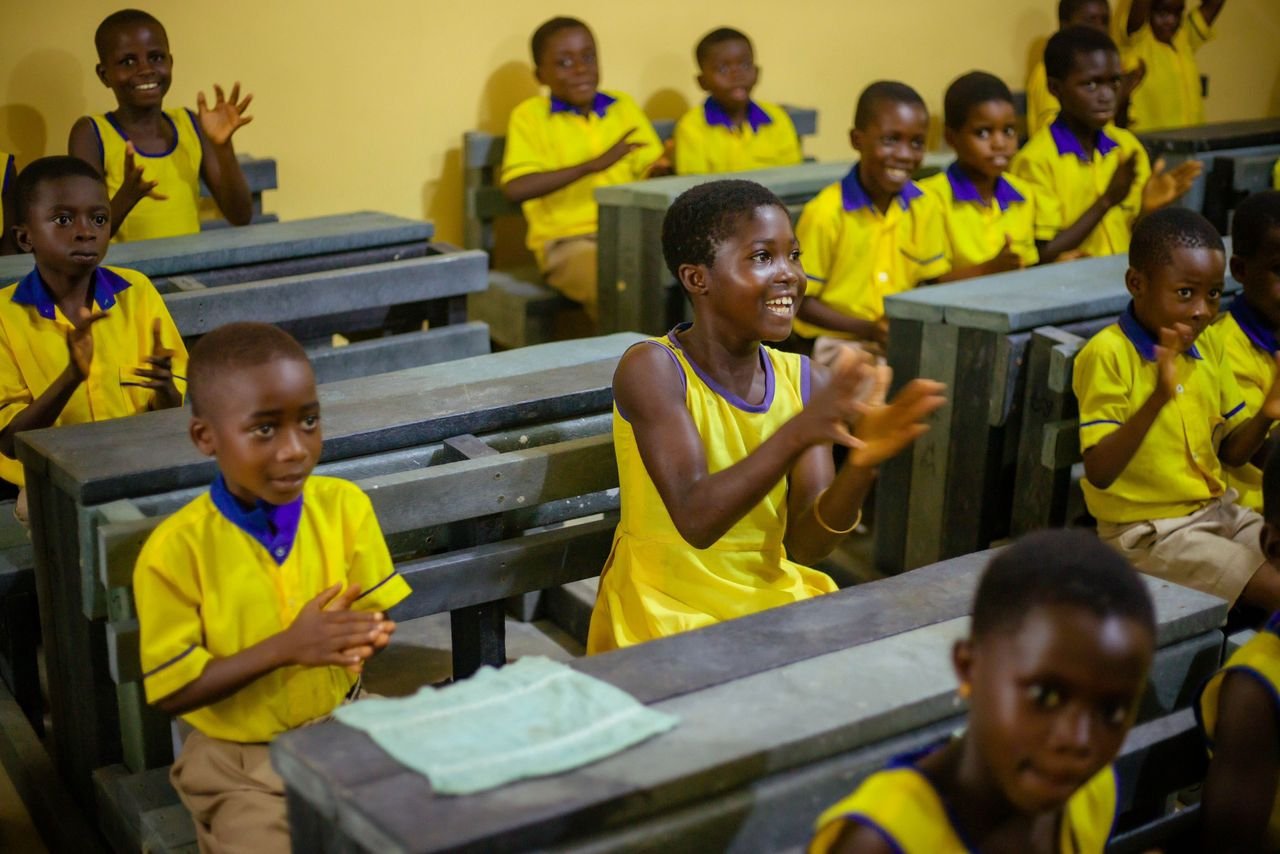
Adarkwa Methodist Primary Receives New 6-Unit Block from Nestlé and ECOM
Pupils at Adarkwa Methodist Primary School in the Eastern Region now have access to modern classrooms after Nestlé Ghana and ECOM Ghana handed over a new six-unit block on Friday, May 22. The donation forms part of efforts to support education in cocoa-growing areas.
The facility includes classrooms, offices, storerooms, and toilet amenities designed to create a safer and more conducive environment for teaching and learning. Stakeholders at the ceremony hailed it as a major boost for the Adarkwa community.
According to Nestlé Ghana Managing Director Salome Azevedo, the project aims to inspire hope and open greater opportunities for children. “I am delighted to be here today for this brief ceremony to hand over a six-unit classroom block with offices, storeroom, and toilet facilities to the Adarkwa Methodist Primary School, an initiative that will inspire new hope and create greater opportunities for the children of this community,” she said.
She stressed the importance of comfortable learning spaces: “In a good classroom, students feel comfortable, respected, and ready to learn. It is a place where young minds are shaped, confidence is built, and dreams are nurtured.”
Mrs. Azevedo added that Nestlé Ghana had earlier this year commissioned four schools in the Ashanti Region and was also commissioning one in Akroma, Central Region. Construction is underway on three more schools with ECOM Ghana, expected to be completed by year-end. She said the initiative reflects Nestlé’s commitment to the well-being of cocoa communities where it sources raw materials, and that the new desks were made from recycled plastic to help tackle waste.
A presiding member representing Suhum Municipal Chief Executive Lydia Ohenewa Sarah praised Nestlé and ECOM for investing in education. She noted the new block would improve teaching conditions, boost attendance, and enhance academic performance, and appealed for proper maintenance to serve future generations.
Headmaster Emmanuel Padi thanked the companies, saying the project fulfilled a long-standing dream. He noted the school had operated for nearly 90 years in a dilapidated building that disrupted learning: “The children were not coming to school frequently. Sometimes they got sick because the classrooms were too hot. During rainfall and extreme heat, academic work had to stop.” He expects the new edifice to improve performance and enrollment.