GSA pushes stronger quality standards to drive Ghana’s economic transformatio
The Ghana Standards Authority (GSA) has called for stronger collaboration among regulators, manufacturers, consumers and other stakeholders to build a quality infrastructure capable of supporting Ghana’s economic transformation and expanding the international market for locally produced goods.
The Authority said effective standards, reliable testing systems and accurate measurement mechanisms were critical to ensuring that Ghanaian products met the requirements of both domestic and international markets.
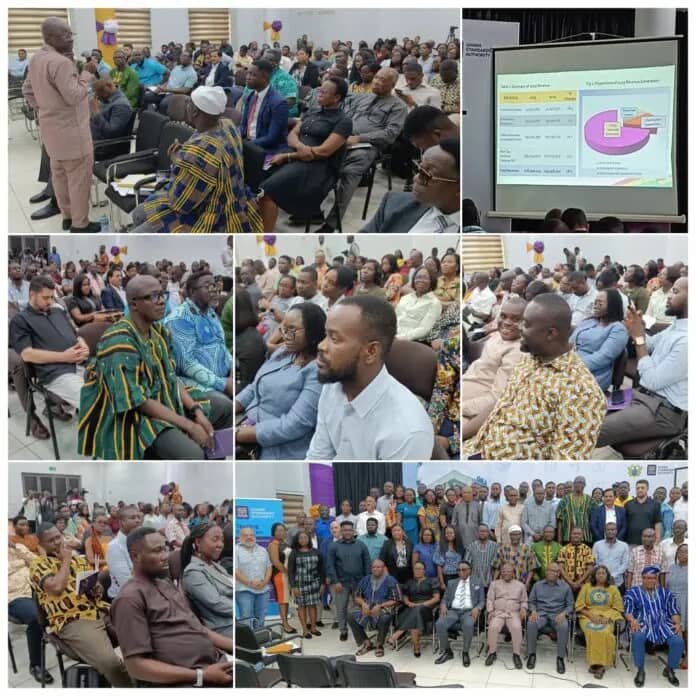
The Chairman of the GSA Governing Board, Alhaji Hudu Mogtari, made the call at the Authority’s second Annual Stakeholders’ Meeting held in Accra on Wednesday, September 16, 2025.
The meeting, organised under the theme, *“The Role of Standards, Quality Assurance and Metrology in the Resetting Ghana Agenda,”* provided an opportunity for industry representatives, regulators, consumers and development partners to examine the country’s quality assurance system and its contribution to national development.
Alhaji Mogtari stressed that the work of the GSA could only produce meaningful results when the Authority maintained close engagement with the industries and businesses affected by its standards.
He said standards developed without adequate consultation and practical testing risked becoming disconnected from the realities of production, commerce and export.
According to him, the effectiveness of a standard should ultimately be measured by how well it works in factories, shops, laboratories and export facilities rather than simply by its existence on paper.
He therefore encouraged stakeholders to provide frank feedback on the Authority’s activities, arguing that constructive criticism would help the GSA identify weaknesses and improve the quality of services it provides.
“Standards are not an obstacle to enterprise; they are its passport,” he said, emphasising the importance of quality requirements in opening international opportunities for Ghanaian businesses.
He added that the Authority remained committed to ensuring that the systems underpinning Ghana’s standards and quality infrastructure contributed positively to the competitiveness of local businesses.
Presenting the GSA’s performance for 2025, the Director-General, Professor George Agyei, reported substantial activity across the Authority’s verification, inspection, calibration and laboratory operations.
He disclosed that the GSA verified *242,764 weights, measures and weighing instruments* during the year, representing a six per cent increase over the previous year’s output.
The Authority’s laboratories also tested *28,375 product samples, while its inspectorate carried out **175,921 inspections*, exceeding the annual target by 31 per cent.
The Director-General further reported that the Authority’s financial performance improved during the period, with revenue increasing by *18 per cent to more than GH¢228 million*.
He attributed the financial outcome to greater discipline in the management of the Authority’s resources, noting that the surplus transferred to the accumulated fund increased significantly.
Despite the progress recorded, Professor Agyei acknowledged that the Authority had fallen short in one important area: standards development.
Out of the *426 standards* targeted for development, the GSA achieved 40 per cent, a performance level he described as an indication of an area requiring greater attention and resources.
He said the figure provided the Authority with a clear basis for determining where additional efforts should be directed in order to improve future performance.
The meeting also highlighted Ghana’s growing role in continental standardisation, with Professor Agyei announcing plans for the country to host the *33rd African Standards Organization General Assembly in 2027*.
The planned event will coincide with the 50th anniversary of the African Standards Organization, which was established in Accra in 1977, bringing the continental body back to the city where it was founded.
Participants at the stakeholders’ meeting were also taken through the GSA’s 2025 audited financial statements and key performance indicators as part of efforts to promote transparency in the Authority’s operations.
The Annual Stakeholders’ Meeting forms part of the governance and accountability framework overseen by the State Interests and Governance Authority (SIGA) under the SIGA Act, 2019 (Act 990).
SIGA’s oversight mandate requires specified entities, including the GSA, to operate efficiently, fulfil their statutory responsibilities and align their activities with Ghana’s broader development objectives.
The stakeholders’ meeting therefore serves as a platform for the GSA to account for its performance, engage stakeholders on operational challenges, communicate future priorities and obtain feedback that can inform institutional planning.
It is also intended to strengthen collaboration, improve service delivery and ensure that the Authority’s programmes remain responsive to the needs of businesses, consumers and the wider economy.
With Ghana seeking to expand domestic production and increase its participation in international trade, stakeholders at the meeting underscored the importance of a standards system that can provide confidence in the quality, safety and reliability of products made and sold in the country.
The GSA’s performance review consequently provided both a record of progress and a roadmap for areas requiring further attention as the Authority works to strengthen Ghana’s quality infrastructure and support the country’s economic agenda.