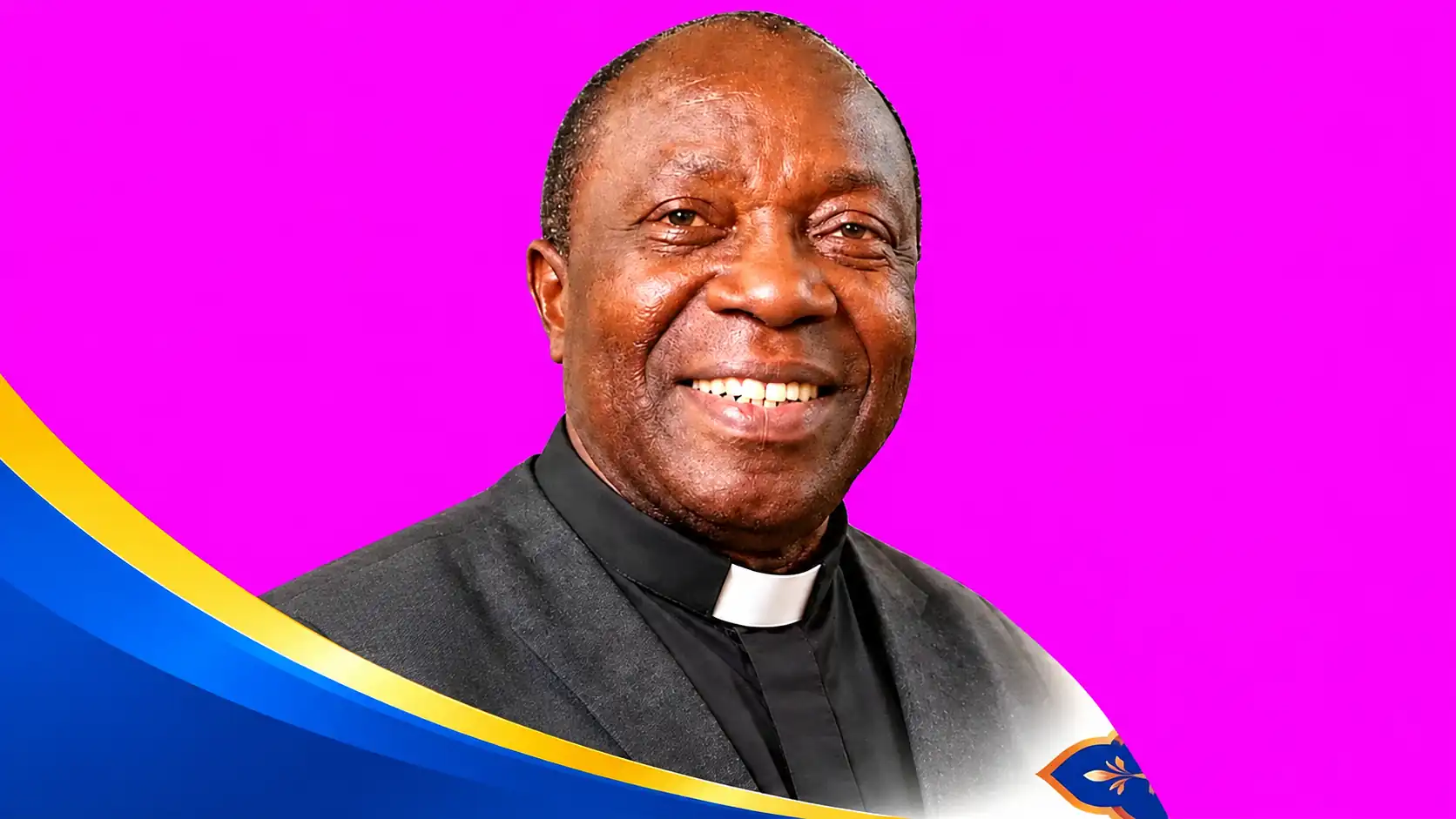
Father Ephriam Mensah: The Priest Who Shaped A Generation
Author: Professor Michael Kpessa-Whyte Former Student, St. Mary’s Seminary/Secondary School. Lolobi
On Saturday November 14, 2026, family, friends, parishioners, former students and well-wishers will join in celebrating a remarkable milestone in the life of Father Ephriam Mensah: fifty years of priesthood.
For the Catholic Church, it is a golden jubilee of faithful service to God. For many of us who passed through St. Mary’s Seminary Secondary School, Lolobi, from the mid-1980s to the late 1990s, it is something more intimate. It is a chance to celebrate the man who watched over us, corrected us, challenged us, prayed with us and, in ways we only fully understand today, helped prepare us for life.
Father Ephriam Mensah was not the kind of school authority one could easily ignore. His presence was felt everywhere—in the chapel, at assembly, in the classrooms, around the dormitories and across the school compound. He seemed to know when something was wrong, when a student was missing, when standards were slipping, and when someone needed either a firm word or a compassionate ear.
At a time when many schools could simply leave the welfare of students to routine procedures, Father Mensah made concern personal. Whenever a student fell seriously ill, he did not always wait for someone else to take responsibility. He would personally drive the student to the hospital. In those moments, the strict priest and disciplinarian became something else: a father caring for one of his own.
That spirit of care showed itself in the regular roll calls he conducted. To some students, especially those eager for a little freedom, roll call could feel like an inconvenience. But Father Mensah understood its purpose. Every name answered was an assurance that a child entrusted to the school was safe. Every unexplained absence demanded attention. It was his quiet way of saying: every student matters.
He had a special gift for using assembly to speak beyond the immediate concerns of school life. His addresses were often more than announcements or warnings. They were moments of counsel. He spoke to the hopes, anxieties and potential of young people finding their way in the world. He urged students to take their education seriously, to value time, to respect themselves and others, and to build lives worthy of the sacrifices their parents and guardians were making.
Father Mensah was also a reader, and he did not keep what he learned to himself. He brought ideas from books into his conversations and engagements with students. A lesson from a book, an example from history, or an insight about human character could become a challenge to us: think more deeply, aim higher, and do not allow the boundaries of St. Mary’s to become the boundaries of your dreams.
Each morning Mass was part of that formation. It was never merely an obligation before the day’s academic work began. Through prayer, reflection and exhortation, Father Mensah encouraged students to see education as a calling and a privilege. He reminded us that our future would be shaped not only by intelligence, but by discipline, faith, conduct and a willingness to serve. He invited us to look beyond the school walls—to imagine the families, communities, professions and nation that would one day need what we had become.
Then there was his famous vigilance. A student could be in class, convinced that the day was proceeding normally, only for Father Mensah to appear unexpectedly at the door. He could visit dormitories without prior notice, observing the condition of the rooms, the conduct of students and the general order of school life. These visits kept students alert, but they also communicated something important: standards mattered, and no part of a student’s life was too ordinary to deserve attention.
His discipline was firm, sometimes severe, and memorable. He used different forms of punishment to correct misconduct and reinforce the values he believed students needed for life. At the time, not everyone welcomed it. Young people rarely do. Yet many former students can now look back and recognise that beneath the strictness was a conviction that character must be formed deliberately. Father Mensah did not want students merely to avoid trouble while at school; he wanted them to become responsible adults after they left.
That distinction is central to his legacy.
The young people who came under his influence have since travelled many paths. They have become professionals, public servants, entrepreneurs, educators, clergy, community leaders and contributors in many other areas of Ghanaian life and beyond. Some work in visible positions; others serve faithfully away from the public eye. But wherever they are, many carry lessons that can be traced to the school days when Father Mensah insisted on punctuality, order, honesty, respect, prayer, hard work and personal responsibility.
Great teachers are not remembered only because they taught subjects. They are remembered because they took an interest in who their students might become. Great priests are not honoured only because they conducted Mass or administered the sacraments. They are honoured because they made faith visible through service, courage and love for people.
Father Ephriam Mensah has been such a priest and such an educator.
As he marks fifty years since his ordination, we celebrate a life of uncommon commitment. We celebrate the priest who prayed for his students and pushed them to do better. We celebrate the headmaster and mentor who could be stern when necessary, gentle when needed and ever watchful over those placed in his care. We celebrate a man whose influence has outlived school assemblies, morning Masses, roll calls, classroom visits and dormitory inspections.
Most of all, we celebrate a father figure whose labour continues to speak through the lives of the many people he helped shape.
Congratulations, Father Ephriam Mensah, on your golden jubilee of priesthood. May God reward your service, preserve your strength and grant you the joy of seeing the lasting fruit of the lives you have touched.