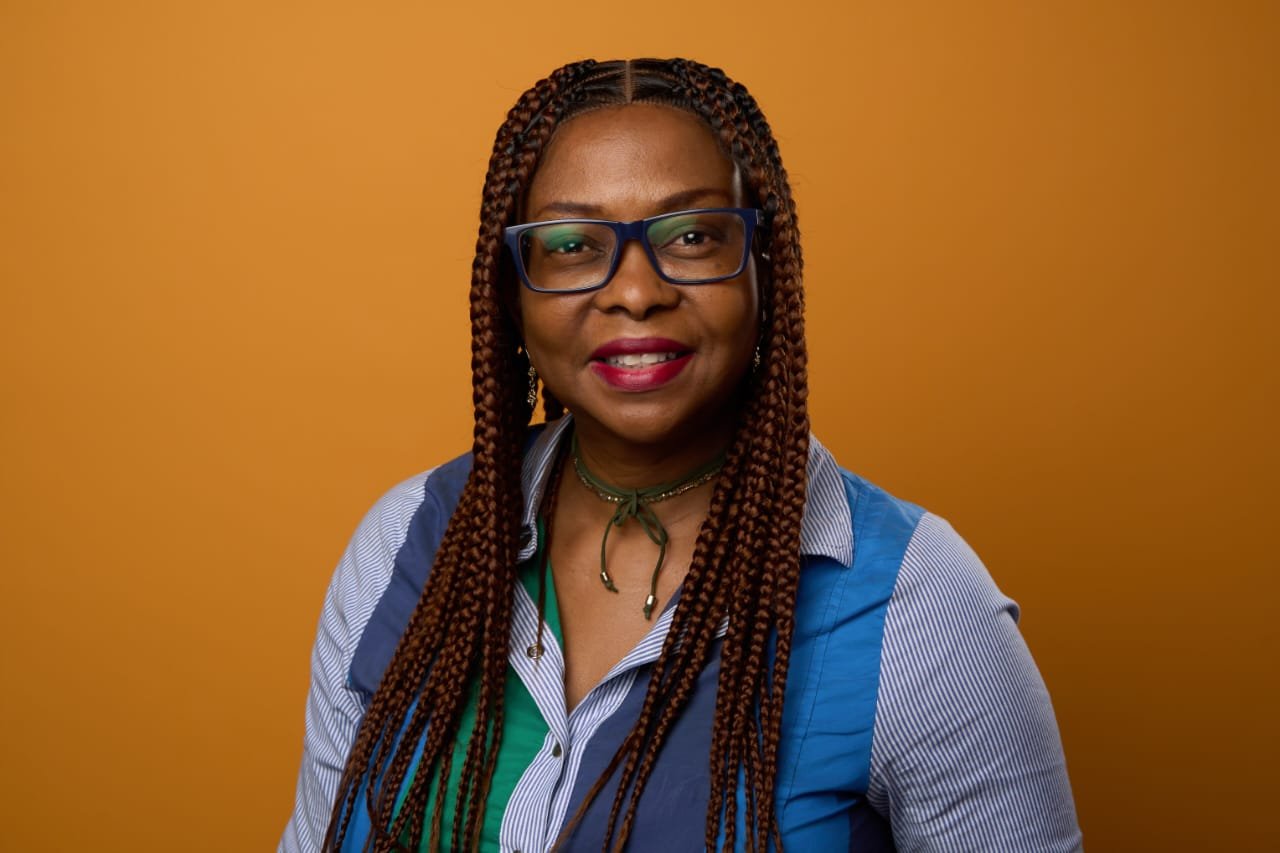
Africa’s Cultural Identity Can Drive Development, Not Division, Says Ford Foundation’s Dr. ChiChi Aniagolu
Sociologist urges decolonial rethink of community loyalty at TTTSD webinar, warns against weaponization of ethnic identity
The solution to Africa’s development crisis may lie in how the continent channels its deepest social bonds. That was the position of Dr. ChiChi Aniagolu, sociologist and Regional Director, West Africa for The Ford Foundation, during Thursday’s Think Tank for Sustainable Development (TTTSD) webinar titled “Reinventing Tribalism to Work for Africa’s Development.”
The session was the second installment of TTTSD’s dialogue series, which the non-partisan network said promotes “informed policy dialogue, national cohesion, justice, good governance, and sustainable development across the continent.” The webinar drew participants from government, civil society, and academia.
Speaking to the cross-sector audience, Dr. Aniagolu challenged Africa’s dominant intellectual camps, those who defend tribal allegiance as identity and those who demand its eradication for modern nationhood, and proposed a third path: re-engineer the emotional and psychological structures Africans already trust to drive measurable development.
“As Nigeria and many African nations confront complex socio-economic challenges, the role of citizens, institutions, and communities in shaping a more equitable future cannot be overstated,” she said. “Africa’s social and cultural identities must be harnessed as catalysts for progress rather than division.”
“Nothing generates more intense conversation or raw passion among Africans than the subject of the tribe,” Dr. Aniagolu stated. “Almost every systemic challenge that Africa faces today is ultimately linked back to tribalism. But the common perception of tribalism as a purely destructive, regressive force is an incomplete narrative. The foundational core of tribalism is not hatred for the outsider, but an innate, evolutionary devotion to one’s own community.”
Dr. Aniagolu drew a sharp distinction between authentic tribalism and its political distortions. She clarified that what Nigerians commonly label as tribalism is often not:
- “Appointing only people from one’s ethnic group into positions of power is not tribalism, it is cronyism because those who get the positions are not necessarily the best from the tribe but friends and associates of the appointer.”
- “Taking all projects to your village or LGA is not tribalism because many of those projects end up not being viable and not useful to the tribe. Nigeria is littered with such abandoned projects.”
- “Voting for someone from your tribe regardless of capacity is not tribalism, but sentimentalism, because ultimately an incompetent person does not benefit the tribe.”
Instead, she defined tribalism as “the state of organizing into groups based on shared cultural, ancestral, or ideological identity,” and argued that reinventing it requires a “fundamental shift in its vector of energy.”
“Instead of directing its focus outward in a posture of defense or aggression against neighboring communities, the redefined tribe turns its gaze inward, focusing entirely on its own internal capacity, welfare, and structural development,” she said. “Pride becomes directly tethered to tangible, measurable metrics of human and structural development within the community itself.”
Tracing the origins of destructive ethnic rivalry, Dr. Aniagolu cited Mahmood Mamdani and Archie Mafeje to argue that “the hyper-adversarial manifestation of tribalism on the continent is not an ancient, inherent African flaw.” She noted that pre-colonial Africa was marked by “fluid, porous boundaries, intermarriage, and flexible trade networks.”
Colonialism dismantled that fluidity through four mechanisms – arbitrary borders, hierarchical favoritism, codification of identity and skewed resource distribution.
For instance, she explained that colonial infrastructure in Nigeria favored southern coasts and cocoa belts, leaving the north “educationally and structurally isolated,” triggering “a zero-sum struggle for state power” at independence.
“This is the cycle we are still trapped in,” Dr. Aniagolu warned. “In the post-colonial era, ethnic identity has been weaponized by political elites competing for centralized state resources… This transforms democratic elections into ethnic censuses, where policy debates are sidelined by identity politics.”
To break the cycle, Dr. Aniagolu urged Africa to “dismantle the imperial executive power, build inclusive civic identities, and create equitable governance systems.” She pointed to indigenous models that already work: