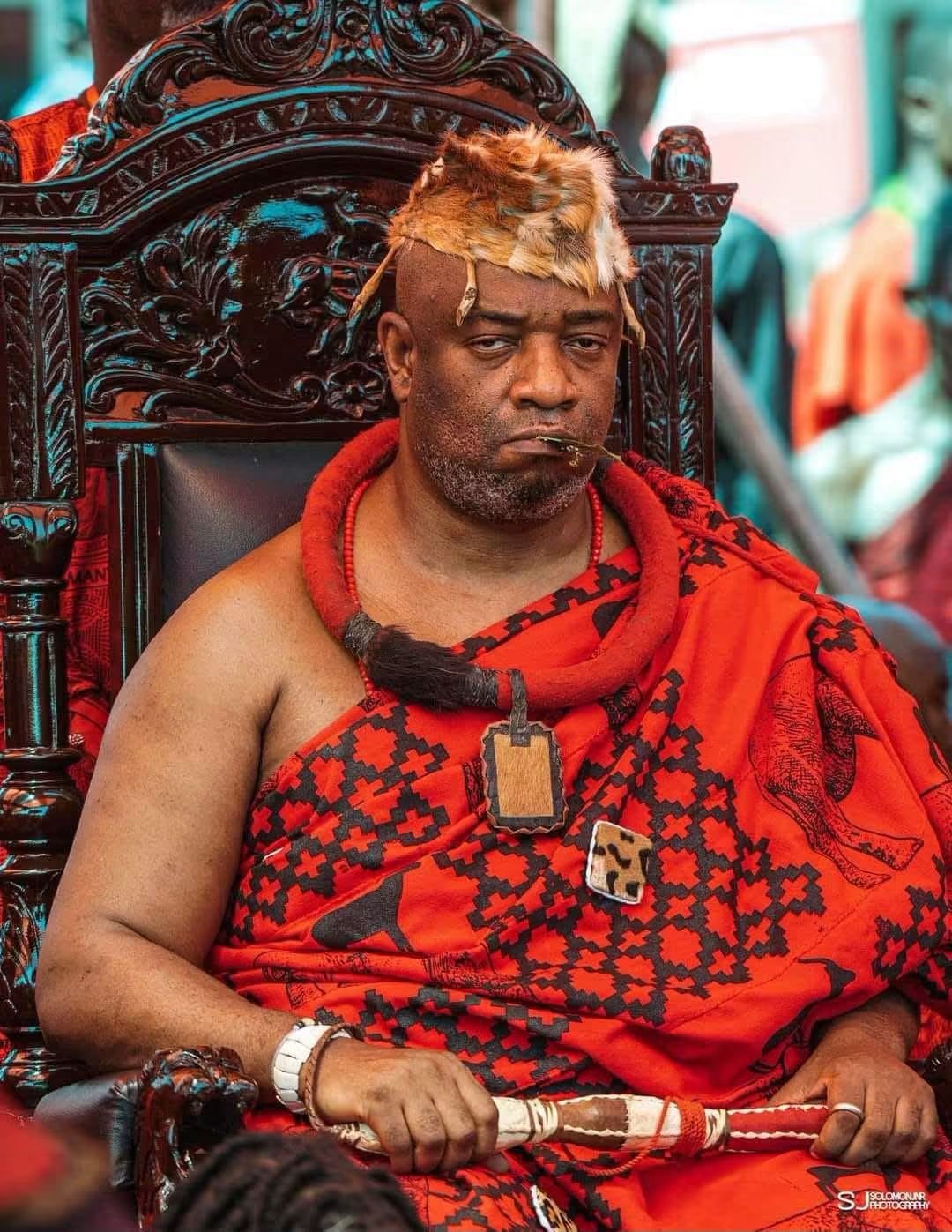
THE POLITICAL AND TRADITIONAL BOUNDARIES OF THE GA STATE
The traditional boundary of the Ga State, under the authority of the Ga Mantse, extends beyond the present-day Greater Accra Region and into parts of the Eastern and Central Regions of Ghana.
Towns and communities such as Papase, Nsumia, Drobo, Larteiman, Chwinto, Adusa and Dadeiman, although politically located outside the Greater Accra Region, are traditionally connected to and fall under the authority of the Ga Mantse.
Some people may ask: How did this come about?
Before 1983, the wider Ga State formed part of the political boundaries of the Eastern Region, alongside the Akyems, Akwapims, Akwamus and Dangmes.
In 1983, the government under the leadership of Flight Lieutenant Jerry John Rawlings created the Greater Accra Region by separating Accra, the capital of Ghana, from the Eastern Region. The objective was to establish a separate political and administrative region for the capital and its surrounding areas.
As a result, many Ga and Dangme communities were moved from the broader Eastern Region into the newly created Greater Accra Region. However, not all Ga and Dangme communities were included in the new region. Some Ga communities remained within the Eastern Region, while several Dangme communities, including areas associated with Yilo and Manya Krobo, also remained there.
But the creation of a new political boundary did not erase the traditional boundaries, history, authority and ancestral connections of the Ga State.
This distinction between political boundaries and traditional boundaries can be seen in other parts of Ghana. For example, in the Ahafo Region, Bomaa is politically located there but is traditionally associated with the authority of the Dormaa Traditional Council, whose traditional territory is centred in the Bono Region. Similarly, Banka in the Ashanti Region is traditionally associated with the Okyenhene, whose traditional jurisdiction is centred in the Eastern Region.
These examples demonstrate that political and traditional boundaries do not necessarily correspond.
The chiefs of the Ga communities that remained in the Eastern Region have historically been connected to the Ga traditional authority, and their traditional allegiance remains an important part of the history and identity of the Ga State.
The Ga State therefore maintains that modern political boundaries cannot simply erase the traditional lands, history and ancestral heritage handed down by our forefathers.
The Ga people will continue to protect and preserve the lands, traditions, culture and heritage for which our ancestors fought and sacrificed.
Tswa ne Omanye aba!