The Cosmonaut Who Went to Space as a Soviet Citizen and Returned to a Different Country of
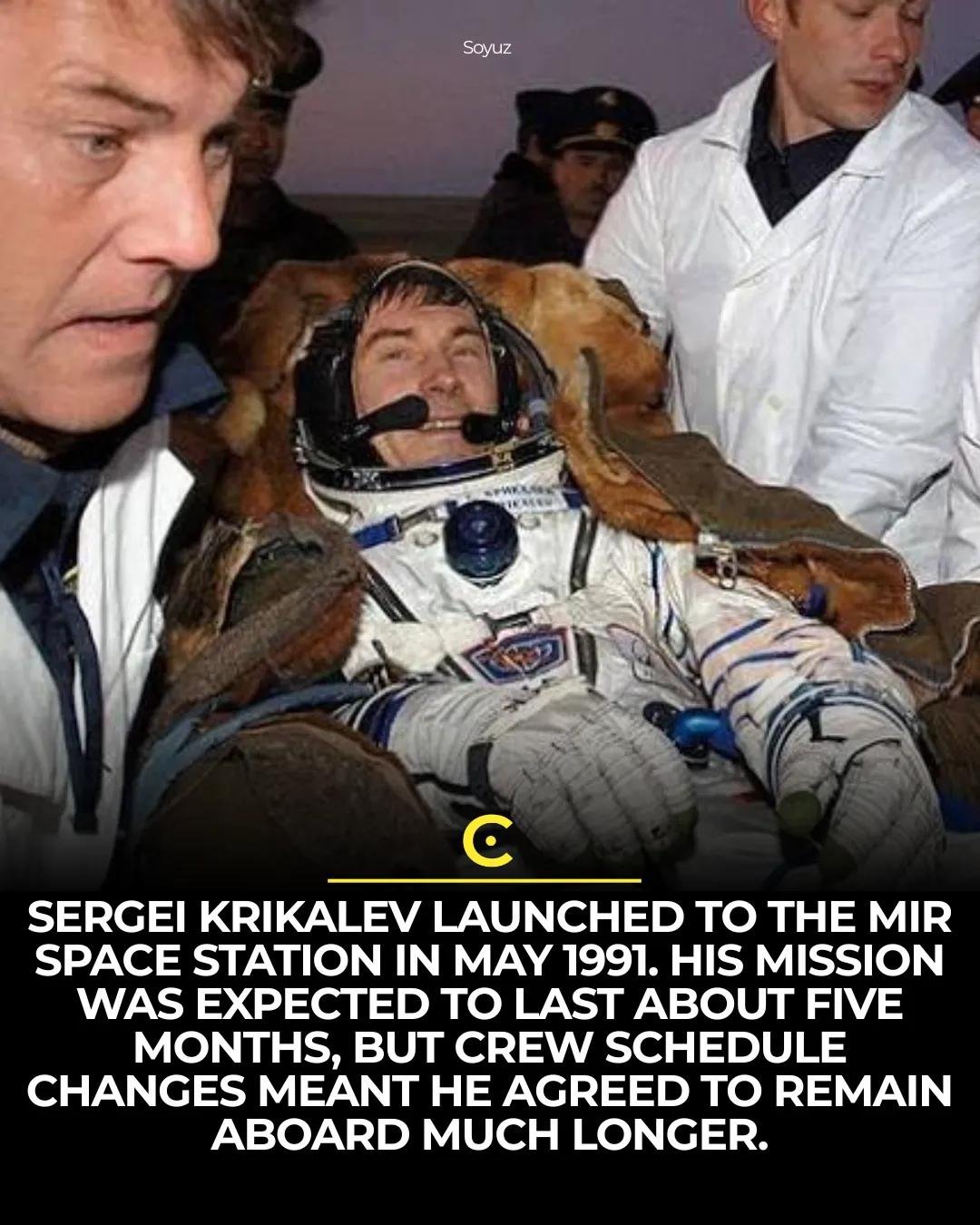
In May 1991, Soviet cosmonaut Sergei Krikalev launched into space aboard Soyuz TM-12, beginning what was supposed to be a routine mission aboard the Mir space station.
But while Krikalev was orbiting Earth, history was unfolding far below him.
His mission would eventually last 311 days, 20 hours, turning him into one of the most remarkable figures of the final days of the Soviet Union.
Krikalev was not literally abandoned in space, nor was he completely unable to return home. His extended stay was the result of a combination of circumstances. Planned crew flights were reorganized, and there was no immediately available, properly trained replacement who could take over his duties on Mir.
As events on Earth became increasingly complicated, Krikalev agreed to remain in orbit.
Then, on December 26, 1991, the Soviet Union officially ceased to exist.
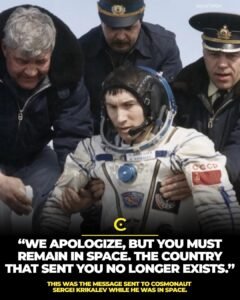
Krikalev had launched as a citizen of the USSR. While he was in orbit, the country that had sent him into space disappeared from the political map.
Even his hometown changed.
Krikalev had been born in Leningrad, the Soviet name for the city now known as St. Petersburg. While he circled Earth hundreds of kilometres above the planet, the city reverted to its historic name.
The political system, government and country he knew had all changed while he remained in space.
Meanwhile, the Soviet space programme itself was being transformed by the collapse of the USSR. The once-unified Soviet system was suddenly being divided among newly independent states, creating uncertainty over funding, personnel and the future of its space programme.
Eventually, Krikalev returned to Earth.
On March 25, 1992, after spending more than ten months aboard Mir, he landed in Kazakhstan.
He had left Earth as a Soviet cosmonaut.
He returned to a world in which the Soviet Union no longer existed.
The story is often simplified into the dramatic claim that Krikalev was “stranded in space.” The reality is more complicated—and in some ways even more extraordinary.
He had not been forgotten. He had not been physically trapped with no way home. Instead, he became caught in an extraordinary historical moment in which political upheaval, logistical problems and the demands of spaceflight kept him in orbit far longer than originally planned.
Krikalev’s experience is a powerful reminder that astronauts and cosmonauts may spend months looking down at Earth, but they cannot escape the changes taking place on its surface.
While he orbited the planet, an empire disappeared beneath him.
When he finally came home, the country that had launched him was gone.