Legal Literacy Key To Empowering Mining Communities to Assert Their Rights—CEPIL Boss
Legal literacy is key to empowering mining communities to assert their rights against companies, the Executive Director of the Centre for Public Interest Law (CEPIL) has told affected residents as the Fair Finance Project intensifies efforts to equip them with knowledge of Ghana’s mining laws.
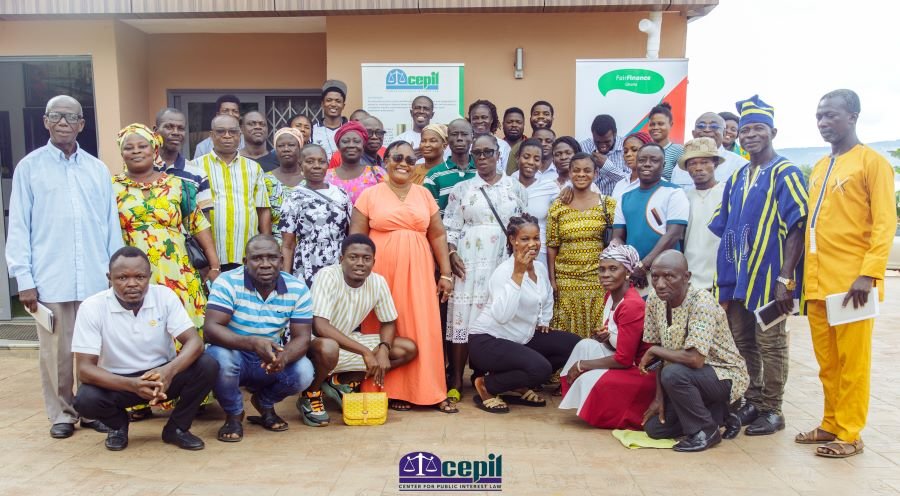
The one-day legal literacy training workshop, held in Koforidua, Eastern Region, June 22, brought together community leaders, farmers, landowners, women, youth, persons with disabilities (PWDs) and civil society organisations from mining-affected areas to deepen their understanding of the legal and regulatory frameworks governing mining operations in Ghana.
The training sought to bridge longstanding knowledge gaps surrounding land acquisition, compensation processes, environmental protection, community rights and avenues for legal redress, while promoting informed participation in natural resource governance.
Addressing the participants, Mr Niber stressed the importance of legal literacy in ensuring that communities are adequately equipped to engage mining companies, regulatory institutions and policymakers on matters affecting their lands, livelihoods and natural resources.
According to him, many communities remain unaware of key provisions within Ghana’s mining laws, including the Minerals and Mining Act, compensation and resettlement regulations, environmental protection laws and water resource management frameworks, often leaving them disadvantaged when dealing with mining-related issues.
Mr. Niber explained that while Ghana was richly endowed with gold and other mineral resources, the exploitation of these resources must be balanced with environmental sustainability and the protection of community livelihoods.
“God has blessed us with natural resources, but how we manage and use those resources for the benefit of present and future generations remains our greatest challenge,” he stated.
He noted that although minerals in their natural state are vested in the Republic and held in trust by the President on behalf of the people of Ghana, communities whose lands and properties are affected by mining activities are entitled to protections under the law.
“The land may belong to individuals, families or stools, but the minerals belong to the Republic. That is why communities must understand the legal processes and protections available to them when mining activities affect their lands and livelihoods,” he explained.
Mr. Niber further took participants through the processes involved in granting mining rights, explaining the distinctions between reconnaissance licences, prospecting licences and mining leases. He stressed that mining companies are required to satisfy various legal and environmental requirements before commencing operations, including obtaining permits from relevant regulatory institutions.
Touching on environmental governance, Mr. Niber expressed concern about the increasing pressure on Ghana’s forests, rivers and other natural resources. He recounted earlier advocacy efforts against permitting mining activities in forest reserves, warning that such decisions could have far-reaching consequences for environmental conservation and sustainable development.
“We cannot pursue mineral wealth at the expense of our forests, water bodies and the livelihoods of communities. Development must go hand in hand with environmental protection and accountability,” he cautioned.
The workshop featured interactive discussions, with participants sharing experiences and raising questions about mining practices and regulatory enforcement in their communities.
Some participants reflected on how mining activities had existed during the time of their forefathers without causing the extensive destruction of water bodies, farmlands and forest resources seen today. They questioned why modern mining operations continue to contribute to environmental degradation, loss of livelihoods and growing health concerns in many communities.
Others raised concerns about the enforcement of mining regulations, citing situations where mining licences are granted but monitoring and inspection activities appear inadequate. Questions were also raised about whether some operators sometimes exceed the limits of prospecting activities and engage in more extensive mining operations than originally authorised under their licences.
Participants also sought clarification on compensation procedures, community notification requirements and the role of institutions such as the Minerals Commission, the Environmental Protection Authority and the Water Resources Commission in regulating mining activities and safeguarding community interests.
Responding to the concerns, Mr. Niber encouraged participants to familiarise themselves with the legal processes governing mining operations and to actively participate in discussions affecting their communities.
He emphasised that informed and organised communities are better positioned to demand accountability and ensure that their rights are respected. He further urged participants to share the knowledge acquired during the training with others in their communities in order to strengthen public awareness and enhance community participation in natural resource governance.
The workshop forms part of the Fair Finance Project, a collaborative initiative between CEPIL and Oxfam in Ghana aimed at promoting transparency, accountability and social justice within Ghana’s extractive sector while empowering communities affected by mining activities to engage meaningfully in decisions that impact their lands, resources and livelihoods.