Kwesi Pratt Takes TV Stations to Task Over Facebook Followers as Hiring Requirement
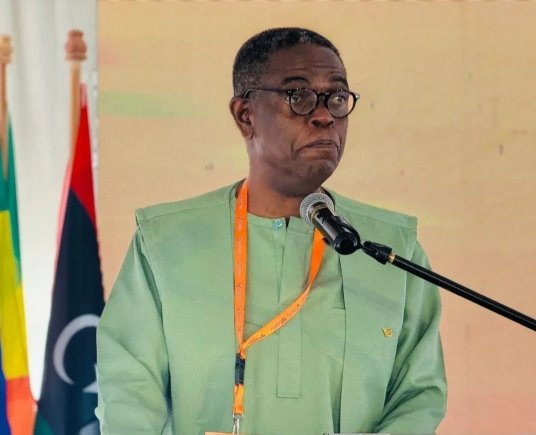
Veteran journalist and Managing Editor of the Insight newspaper, Kwesi Pratt Jnr, has criticised television stations that use social media following as a criterion for recruiting presenters.
According to Mr Pratt, the practice of requiring prospective presenters to have a certain number of Facebook followers before they can secure employment undermines professional standards in journalism.
He described the approach as “a complete affront to all of our standards”, warning that media organisations risk damaging public confidence in journalism when popularity on social media becomes more important than professional competence.
Mr Pratt made the remarks on Wednesday, August 19, 2026, at a symposium organised by the Ghana Journalists Association (GJA) to mark its 77th anniversary in Accra. (Graphic Online)
‘Journalism is not a popularity contest’
Mr Pratt said he was aware of television stations where aspiring presenters could be denied employment simply because they did not have a sufficiently large following on Facebook.
He argued that while social media has become an important tool for media organisations to reach audiences, follower numbers should not determine whether an individual is qualified to work as a journalist or presenter.
For him, journalism requires professional judgement, accuracy and a commitment to informing the public—not simply the ability to attract clicks, likes and followers.
He cautioned that digital platforms often reward sensational content, controversy and outrage because such material generates attention, while journalism has a different responsibility.
The veteran journalist said the central duty of a journalist should be to determine what the public needs to know, rather than simply pursuing whatever is likely to attract the largest audience. (Graphic Online)
Speed versus accuracy
Mr Pratt also raised concerns about the pressure created by the speed of digital publishing.
He noted that being the first media organisation to publish a story does not necessarily make it the most accurate or important report.
A journalist, he suggested, could break a story first and still get it wrong, while another journalist who publishes later could provide the more significant and accurate account.
He therefore urged newsrooms to ensure that the race for speed and online engagement does not weaken the professional standards that distinguish journalism from ordinary social media content.
‘Listen to ordinary Ghanaians’
The discussion also touched on whose voices dominate Ghana’s news agenda.
Mr Pratt challenged media organisations to give greater attention to the experiences of ordinary citizens, including farmers, market women, fishermen, teachers, nurses, unemployed young people and communities outside the centres of political and economic power.
He argued that these groups should not only become news subjects when disasters or crises occur.
For journalism to genuinely tell the story of Ghana, he said, journalists must be willing to go into communities and listen to people whose experiences are often reduced to statistics.
Protecting media credibility
Mr Pratt’s broader argument focused on the future of journalism in an increasingly digital and AI-driven media environment.
He said the challenge facing journalists was no longer simply finding information but determining what information was accurate and establishing the truth in an environment where the public is overwhelmed with content.
He identified accuracy, verification, fairness, courage and investigative journalism as essential to maintaining public trust in the media.
He also raised concerns about the influence of media ownership, funding, advertising and political interests on editorial independence.
The GJA’s 77th anniversary symposium was held under the theme: “GJA at 77: Building on our legacy, advancing ethical journalism and shaping the future of digital media.” (Graphic Online)
The debate over Facebook followers and presenter recruitment therefore raises a wider question for Ghana’s media industry: Should a journalist’s popularity online determine their professional value, or should competence, credibility and journalistic judgement remain the primary considerations?