Is the Connection About Ancestry — or Economic Power?
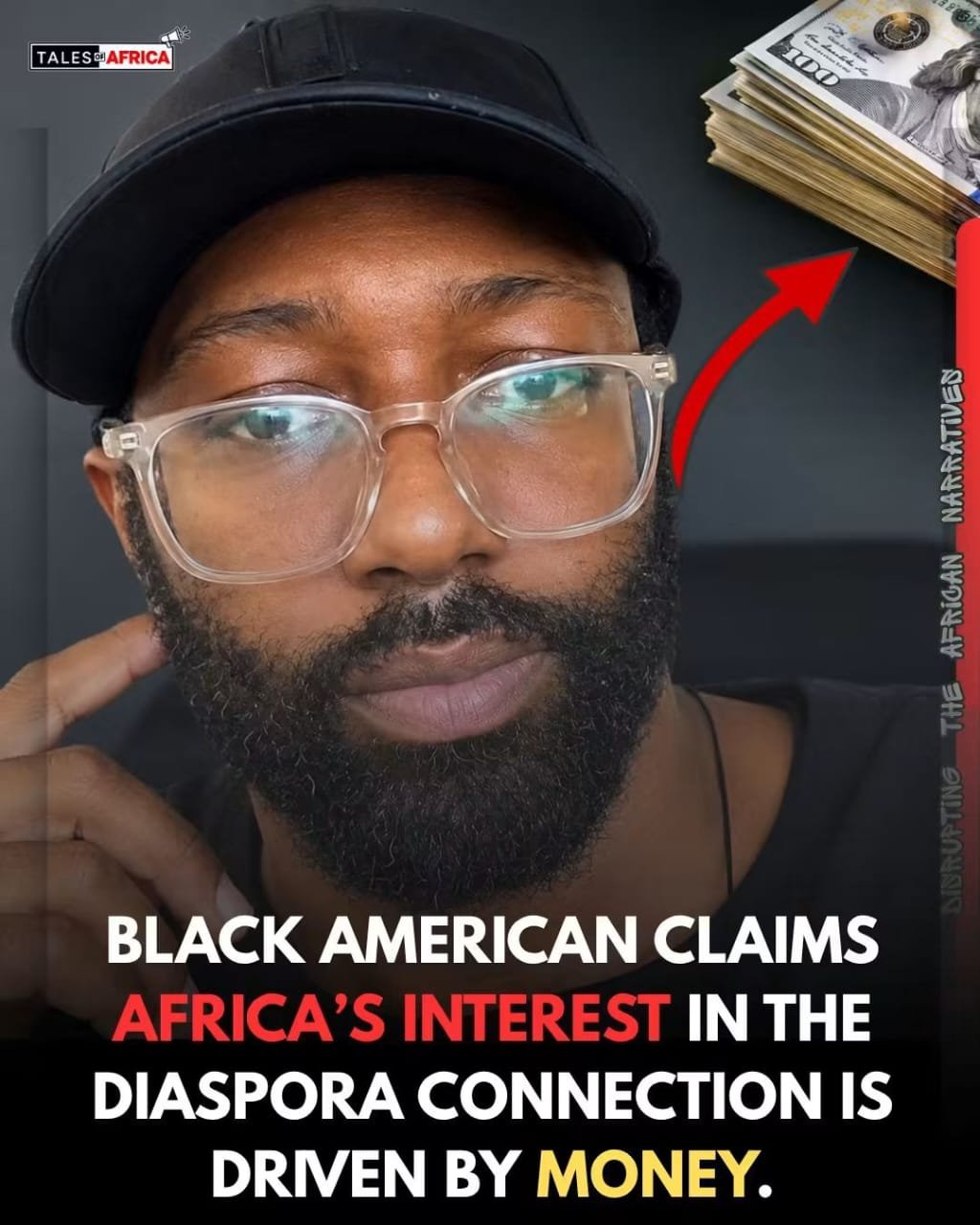
A Black American man has sparked a lively debate online after making a provocative claim about the relationship between Black Americans and Africans.
According to him, some Africans are particularly eager to identify Black Americans as “Africans” not only because of their shared ancestry and history, but also because of the economic power associated with the African-American community.
He pointed to the often-cited figure of more than US$1 trillion in annual spending power among Black Americans, arguing that this economic influence could be one reason some people across Africa place strong emphasis on the African identity of the diaspora.
His argument is that the connection can sometimes extend beyond questions of ancestry, culture and history. In his view, there are also practical economic interests involved — including tourism, investment, business opportunities, property purchases and consumer spending.
The claim has reignited a much broader conversation about the relationship between Africans on the continent and people of African descent in the diaspora.
For generations, the connection has been discussed through the lens of a shared history. The transatlantic slave trade scattered millions of Africans across the Americas, while colonialism and subsequent migration created complex relationships between the continent and its diaspora.
In recent years, countries such as Ghana have actively promoted diaspora tourism and initiatives encouraging people of African descent to visit, invest and reconnect with the continent.
But the question raised by the speaker is whether some of these relationships are increasingly being shaped by economics as much as identity.
Is the desire to reconnect with the African diaspora primarily about heritage and historical bonds?
Or does the potential economic benefit also play a significant role?
The reality may be more complicated than either explanation suggests. For some Africans and members of the diaspora, the relationship is deeply personal and cultural. For others, business, tourism, investment and economic opportunity are legitimate parts of reconnecting with Africa.
The debate therefore raises an interesting question: Can a relationship based on shared ancestry also have economic motivations without making the relationship less genuine?
Perhaps the answer is that identity and economics do not necessarily have to be mutually exclusive.
After all, shared ancestry, history and culture may be what started the conversation — but in today’s global economy, money, investment and business inevitably become part of it.
So, as the debate continues, one humorous question remains:
Is the real connection the bloodline, the history, the culture — or, as he suggests, the credit card?
#TalesOfAfrica