
Pastor Adeboye-Led RCCG Deploys Two Surgical Robots at Redeemer’s Health Village
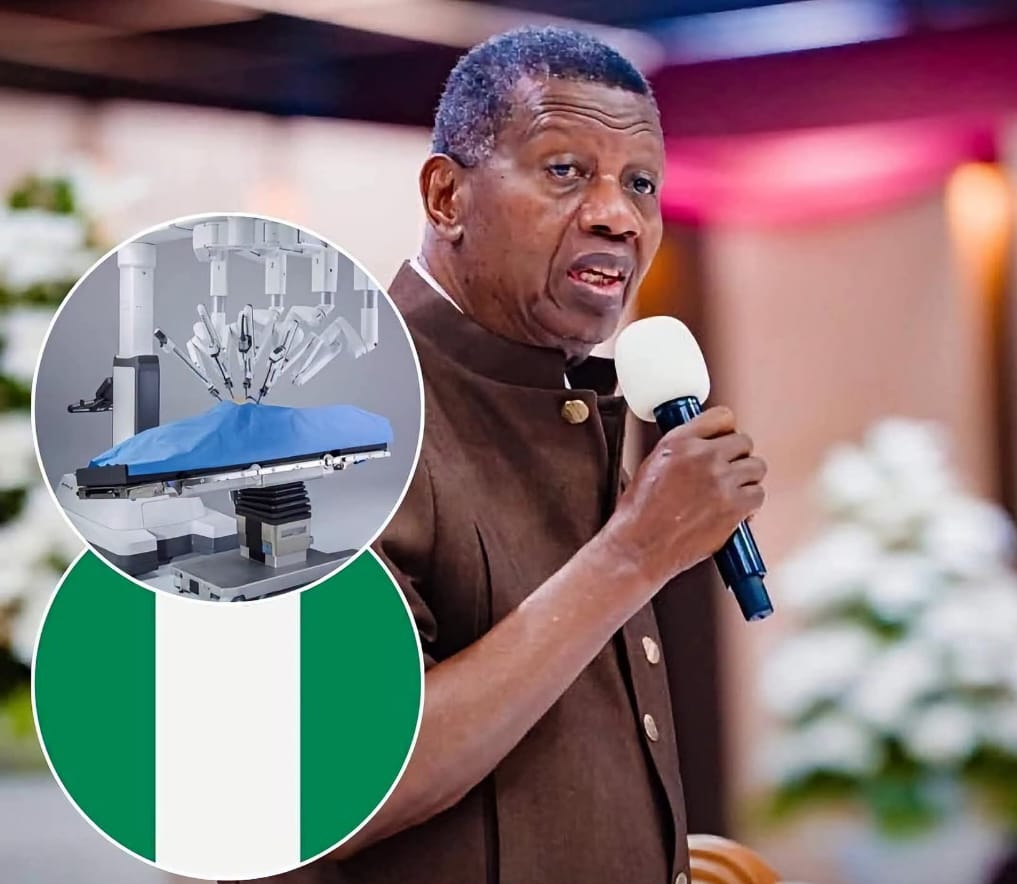
The Redeemed Christian Church of God (RCCG), under the leadership of General Overseer Pastor Enoch Adeboye, has taken a significant step toward transforming healthcare delivery in West Africa by acquiring two state-of-the-art surgical robots. Deployed through Redeemer’s Health Village (RHV)—a 300-bed multispecialty hospital established by the church—this $4 million initiative introduces advanced robotic-assisted procedures to Nigeria while addressing the critical challenge of medical brain drain.
Bridging the Technological Gap
In partnership with US-based RoboMed Global Inc., Redeemer’s Health Village has structured its dual-robot strategy to maximize both patient care and professional development. One surgical robot is dedicated entirely to clinical procedures across specialized fields, including urology, gynecology, thoracic, colorectal, and general surgeries. The second system is assigned to a newly established Robotic Academy, designed to train and certify local surgeons and healthcare workers.
By creating a structured local pipeline for specialized training, the program aims to equip Nigerian doctors with cutting-edge skills, reversing the long-standing dependency on overseas healthcare systems.
Tackling Medical Tourism and Affordability
Every year, thousands of Nigerians travel abroad for complex surgical care, resulting in massive capital flight. RHV’s initiative directly targets this challenge by bringing world-class robotic precision—known for reducing recovery times, minimizing surgical trauma, and improving patient outcomes—directly to the local population.
Crucially, the facility aims to make these high-tech procedures accessible. According to RHV leadership, surgeries performed at the facility will cost approximately 5% of what patients typically pay in North America or Europe, offering a cost-effective alternative for patients across the West African sub-region.
A Faith-Based Model for Social Impact
This milestone reflects a growing model of faith-based corporate social responsibility that goes beyond traditional charity to build sustainable public infrastructure. By combining technological innovation with local capacity building, the initiative sets a benchmark for how non-governmental organizations can meaningfully contribute to national healthcare development.