
History, Heritage and National Development: Why Julius Debrah’s PhD
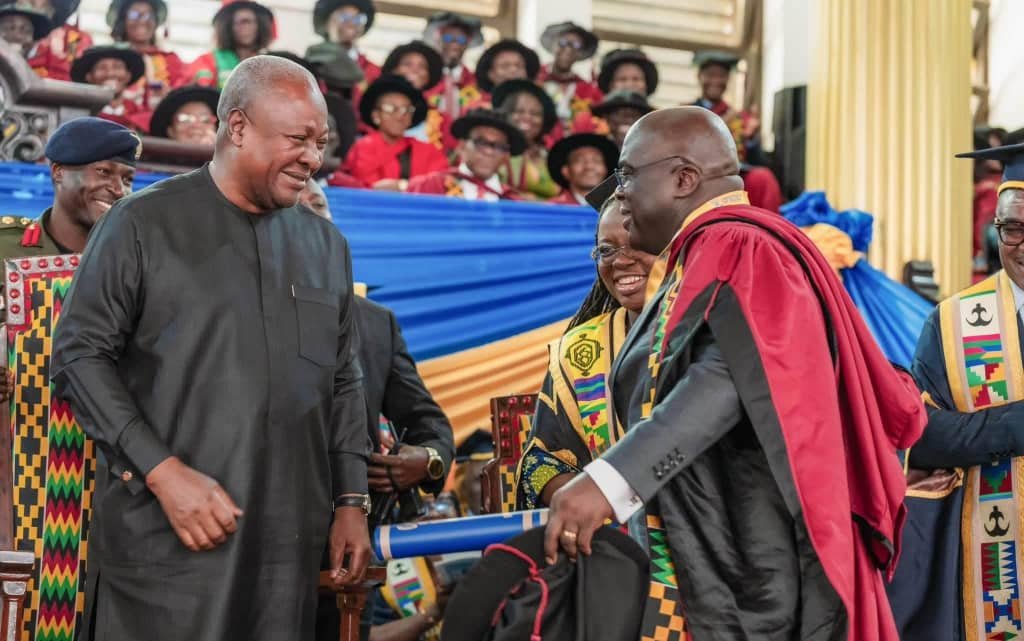
The conferment of a PhD in Museum and Heritage Studies on Hon. Julius Debrah is more than a personal academic achievement; it is a recognition of a lifelong commitment to understanding, preserving, and promoting Ghana’s history, culture, and heritage.
His doctoral studies underscore a fundamental truth: history is the foundation upon which all systems of knowledge are built. Julius Debrah’s intellectual journey reflects a rare combination of scholarship, public service, and practical experience. From earning a Bachelor of Arts degree in Archaeology and Sociology, to a Master’s degree in Archaeology with specialization in Museums and Heritage Studies, and now a PhD in Museum and Heritage Studies, his academic progression demonstrates a consistent engagement with the study of history, archaeology, culture, and heritage.
Unfortunately, some reactions on social media have sought to reduce this achievement to partisan politics. Such criticism reflects a narrow understanding of both scholarship and national development. Academic work should be examined on its substance, evidence, and contribution to knowledge. Scholarship advances through critical study and debate, not condemnation.
History remains one of humanity’s most important sciences because it provides the basis for understanding how societies develop and change. Just as Charles Darwin identified the laws governing organic evolution, historical and social sciences seek to explain the development of human societies and institutions. Understanding the past is essential to shaping the future.
The world’s most successful nations understand this principle. China has used its 5,000-year civilization to inspire patriotism, national confidence, and development. The United States continually draws upon its founding history and national symbols to strengthen civic identity. France, Britain, Russia, and Japan all invest heavily in preserving and promoting their cultural heritage, museums, monuments, and historical narratives because they recognize that history is not merely about the past—it is a source of national pride, social cohesion, tourism, soft power, and economic growth.
Ghana is equally endowed with historical assets. From our forts and castles to archaeological sites, cultural landscapes, and traditional institutions, the country occupies a unique place in world history. Along the West African coast, names such as the Gold Coast, Ivory Coast, and Slave Coast emerged from centuries of interaction that helped shape the modern world. Today, these sites remain living archives of human history.
The significance of Ghana’s heritage extends beyond academic inquiry. Egypt has demonstrated how archaeology and heritage preservation can generate substantial economic returns through tourism. Ghana possesses similar opportunities through its castles, museums, cultural festivals, traditional communities, and heritage sites connected to the trans-Atlantic slave trade.
Julius Debrah’s practical experience in tourism complements his academic work. As Chief Executive Officer of the Ghana Tourist Board, he played an important role in strengthening Ghana’s tourism institutions and advancing the sector’s contribution to national development. His understanding of museums, heritage conservation, tourism development, and community participation is informed not only by theory but also by years of practical leadership.
The importance of tourism to Ghana’s economy remains understated. Heritage tourism and cultural tourism have the potential to create jobs, attract investment, strengthen national identity, and deepen ties with the African diaspora. This was the vision behind initiatives such as the Year of Return and Beyond the Return, which successfully positioned Ghana as the gateway for Africans in the diaspora seeking to reconnect with their ancestral homeland. The visit of President Barack Obama to Cape Coast Castle further underscored the global significance of Ghana’s historical heritage.
In this context, Julius Debrah’s academic achievement aligns with the broader objectives of President John Dramani Mahama’s Reset Agenda and Ghana’s continuing efforts to advance reparatory justice for the historical injustices of the trans-Atlantic slave trade. By investing in museums, heritage studies, archaeological research, and tourism development, Ghana can preserve its past while creating opportunities for future generations.
Leadership is built on the foundation of knowledge. Nations prosper when they value scholarship, protect their heritage, and invest in understanding their own history. For Ghana, history is not merely about the past; it is a strategic resource for national development, cultural diplomacy, tourism growth, and economic transformation.
Paul Hamah
Coordinator @ Network For Africa Renaissance
networkafricarenaissance@gmail.com