Indigenous Knowledge at the Heart of Wildlife Education Reform in Ghana
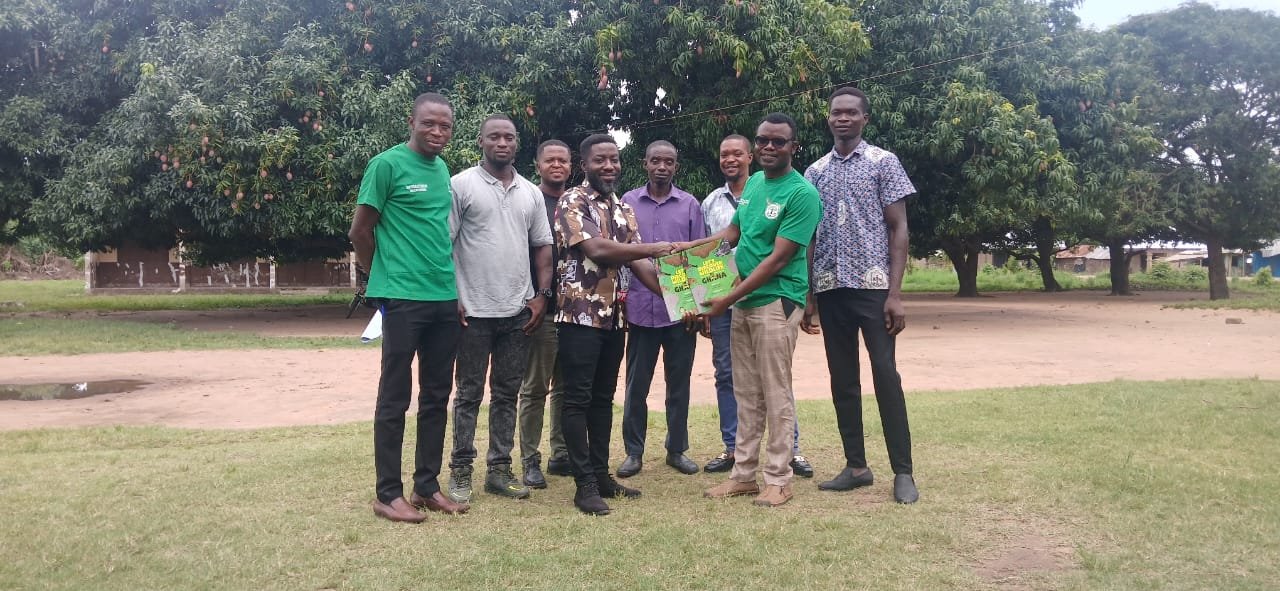
The Director of the Rights of Nature Ghana Movement (RoNAG), Dr. Dickson Adom, is leading a groundbreaking initiative aimed at transforming wildlife conservation education in Ghana’s basic schools while strengthening the educational outreach programmes at Bomfobiri Wildlife Sanctuary. The research, undertaken by Dr. Adom is part of his ongoing Master of Philosophy in Teaching and Learning programme at University of Skills Training and Entrepreneurial Development (USTED), seeks to develop an indigenous knowledge-inspired pedagogical model for wildlife conservation education in basic schools within the Sekyere-Kumawu District. The study is supervised by Prof. Philip Oti-Agyen and Dr. Grace Yeboah. The initiative responds to growing concerns that wildlife education in Ghana remains overly dependent on Western scientific perspectives, often overlooking the realities of Ghana’s local ecosystems, indigenous ecological knowledge systems, and cultural heritage.
During extensive fieldwork involving park officers, teachers, students, hunters, and community elders in six communities within the Sekyere-Kumawu District, participants strongly advocated for the integration of indigenous knowledge into wildlife education to make learning more culturally relevant, locally grounded, and relatable to learners’ lived experiences. Mr. Mohammed Dramani, the Tourism and Community Collaboration Officer of the sanctuary, together with basic school teachers and students who participated in interactive interviews and focus group discussions, emphasized that effective wildlife conservation education must reflect the cultural identity and environmental realities of Ghanaian communities. One of the most compelling voices in the study was the Chief of Drobonso, who also serves as the Chief of Hunters (Abomofohene) for the Asantehene, Nana Jamina Dankwah Dwabi-Siaw. In an exclusive interview with Dr. Adom and his research team, the traditional leader expressed concern that wildlife education dominated by Western scientific knowledge often fails to connect meaningfully with Ghana’s indigenous ecosystems and wildlife species.
He further argued that many local wildlife names have been inaccurately translated into English, thereby distorting their meanings and cultural significance. According to him, indigenous names for wildlife species are often descriptive and deeply connected to the animals’ physical appearance, feeding behaviour, movement patterns, habitats, instinctive traits, and areas where they are predominantly found. Hunters who participated in the study warned that indigenous knowledge relating to wildlife species in the district could gradually disappear if deliberate preservation efforts are not undertaken. They recounted that historically the Sekyere-Kumawu area was known for its rich diversity of wildlife, which contributed to the appointment of the district’s hunting chief as the official hunting leader for the Asante Kingdom. Interestingly, the hunters and traditional authorities provided an extensive list of wildlife species believed to exist within the district, some of which are absent from the official records of the sanctuary because park officers have not yet documented them. This revelation highlighted the urgent need for collaboration between park officers and local hunters in updating the wildlife taxonomy of both the sanctuary and the wider district. The findings significantly support Dr. Adom’s proposed collaborative teaching model, which seeks to bring together basic school teachers, wildlife officers, hunters, and community elders in delivering wildlife conservation education. Under the model, experienced hunters would serve as guest educators, sharing indigenous ecological knowledge and practical field experiences with learners.
Participants in the study unanimously endorsed the development of an indigenous knowledge-inspired wildlife pedagogical model that carefully integrates folktales, folksongs, proverbs, totemic practices, sacred groves, outdoor learning activities, cultural symbols, beliefs, and field-based learning approaches into wildlife education.
According to the participants, such an approach would help decolonise Ghana’s basic school curriculum by reducing the overreliance on foreign wildlife examples and replacing them with locally relevant content that reflects Ghana’s biodiversity and cultural heritage. Beyond the pedagogical model, Dr. Adom also intends to develop learner-centred wildlife books rooted in Ghanaian indigenous knowledge systems. The proposed books would contain local names of wildlife species alongside verified English translations and detailed descriptions of their characteristics. The books would additionally address themes such as wildlife conservation, environmental stewardship, threats to biodiversity, traditional conservation practices, wildlife laws, and human responsibilities toward nature. The proposed learning materials would make extensive use of visual illustrations and graphical representations of animals. Park officers and teachers involved in the study noted that pictorial learning remains one of the most effective approaches for teaching wildlife conservation concepts to children.
The study participants further recommended a nationwide review of Ghana’s Science curriculum for basic schools to incorporate indigenous wildlife knowledge and contextual environmental content. They argued that such reforms are necessary to make wildlife education more meaningful, culturally responsive, and environmentally relevant to Ghanaian learners. Dr. Adom’s research work was supported by members of the RoNAG Youth Wing, namely Marvellous Mensah, Maureen Jones Nkrumah, and Isaac Perfect Kwame Amede.