
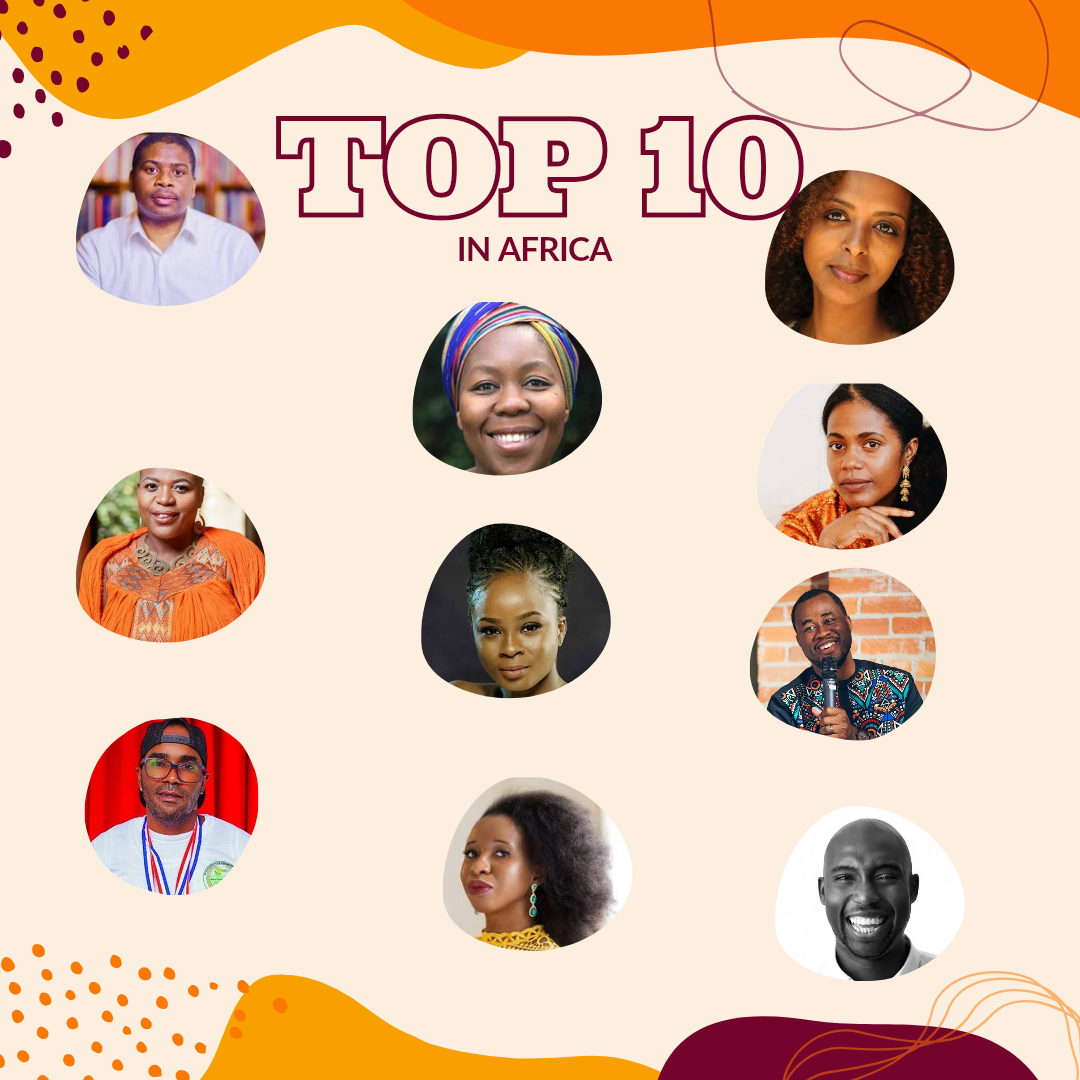
African literature is experiencing a historic moment. Over the past three years, a new generation of writers has not only captured readers worldwide but has also accumulated international awards, global translations, and critical recognition across some of the most prestigious literary platforms.
This is not just a literary movement it is a profound cultural transformation. Africa has moved from the margins to the center of contemporary literary production.
Driven by innovative aesthetics, universal themes, and a strong connection to cultural identity, these authors are redefining the global literary canon and positioning the continent as one of the most dynamic creative hubs of our time.
 Top 10 Young African Writers Shaping Global Literature.
 1. Caleb Azumah Nelson (Ghana/United Kingdom)
Winner of the Costa Book Award (First Novel) for Open Water, Nelson has become one of the most influential voices of the new African literary wave. His second novel, Small Worlds, further cemented his international presence, with works widely translated and critically acclaimed.
 2. Akwaeke Emezi (Nigeria)
A bestselling author and finalist for major awards such as the Women’s Prize for Fiction, Emezi is recognized for redefining contemporary storytelling through themes of identity, spirituality, and existence. Their work is widely studied in academic institutions.
 3. Chigozie Obioma (Nigeria)
Twice shortlisted for the Booker Prize (The Fishermen and An Orchestra of Minorities), Obioma is a global reference in African literature. His works have been translated into more than 20 languages.
 4. Maaza Mengiste (Ethiopia/USA)
Shortlisted for the Booker Prize with The Shadow King, Mengiste stands out for reinterpreting African history, giving voice to overlooked narratives, particularly those of women.

 5. Nituecheni Africano (Angola)
Winner of the Sankofa Book Awards Kenya 2025, one of the most prestigious literary awards on the African continent.
His novel “The Recluse: The Beginning and the End of an Injustice” stood out among writers across Africa for its profound exploration of justice, memory, and human dignity.
This international recognition has led to:
growing global visibility
interest in international translations
inclusion in African and global literary circuits
 This achievement positions Nituecheni Africano as one of the most relevant emerging voices in contemporary African literature, marking a significant moment for Angolan literature. 6. Imbolo Mbue (Cameroon/USA)
Author of How Beautiful We Were, widely discussed in international literary circles, including influential global book clubs. Her work critically addresses inequality and neocolonialism.
7. Damilare Kuku (Nigeria)Her book Nearly All the Men in Lagos Are Mad has become a contemporary literary phenomenon, particularly among younger readers, gaining increasing international recognition.
8. Sisonke Msimang (South Africa)A respected writer and essayist, with contributions to major international platforms such as The New York Times and The Guardian. Her work focuses on politics, identity, and memory.
9. Zukiswa Wanner (South Africa/Kenya)Beyond her literary work, she plays a key role in promoting African literature through festivals and cultural initiatives across the continent.
10. Nthikeng Mohlele (South Africa)A respected figure in African literature, known for his consistent contribution to discussions on identity, society, and contemporary thought.
 A New Global Literary Order
The rise of African literature is supported by concrete data: international publishers are increasingly investing in African authors, while universities and critics recognize the continent as one of the most important creative centers today.
In recent years, several of these writers have been featured by leading publications such as The New York Times, reinforcing the global recognition of contemporary African literature.
More than a trend, this represents a redefinition of the global literary canon.
ConclusionThis new literary landscape represents more than talent it represents impact, transformation, and cultural affirmation.
This generation of African writers is not asking for space. They are claiming it with authenticity, quality, and a powerful global voice.
At the heart of this transformation, names like Nituecheni Africano demonstrate that Angola is beginning to assert itself on the global literary stage.
Africa is no longer emerging.
Africa is leading.


 By
By