Author: VEK

  • Stanbic Bank Urges Women Entrepreneurs to Leverage Social Media for Business Growth

    Stanbic Bank Urges Women Entrepreneurs to Leverage Social Media for Business Growth


    Women-led
    businesses in Ghana are being encouraged to move beyond passive online activity
    and strategically use social media as a critical tool for growth, visibility
    and access to finance.

    This
    call was made by the Head of Women Banking at Stanbic Bank Ghana, Marian
    Amartey, during the MTN SME Accelerate Webinar Series, where she spoke on the
    topic, “Breaking Barriers to Growth for Women in Business.” Her remarks
    highlighted a growing gap between the potential of women-owned enterprises and
    their ability to position themselves effectively in an increasingly digital
    business environment.

    According
    to her, while many women entrepreneurs are active on social media platforms,
    few are fully utilizing these tools to build credible business profiles that
    can attract customers, partners and even financial institutions.

    “Social
    media presence is no longer optional; it plays a key role in validating what
    you do as a business. Sometimes, before engaging you, financial institutions
    will check your online footprint. If you are not visible or intentional about
    your presence, you limit the information available for decision-making.”

    Her
    comments come at a time when small and medium-sized enterprises (SMEs),
    particularly in sectors such as trade, agribusiness and light manufacturing,
    are increasingly relying on digital platforms to reach wider markets. Yet, many
    women entrepreneurs, she observed, still treat social media as a casual posting
    space rather than a strategic business tool.

    Madam
    Amartey stressed that simply posting content without consistency or direction
    is insufficient. Instead, she encouraged women to adopt a more structured
    approach, one that includes showcasing products professionally, engaging
    audiences, and using built-in promotional tools to drive visibility.

    “Posting
    and going to sleep is not enough. These platforms have tools that can help you
    promote your work effectively. You need to be deliberate about how you present
    your business.”

    Beyond
    visibility, she pointed to partnerships as a key enabler of strong digital
    presence. Recognizing that many entrepreneurs juggle multiple responsibilities,
    from running their businesses to managing family and social commitments, she
    advised them to delegate certain functions to professionals.

    “You
    cannot do everything alone. Focus on your core business, whether it is food
    production, fashion or services, and bring in people who can help you build
    your brand online. That collaboration can significantly improve how quickly you
    grow.”

    This
    approach, she argued, not only enhances market reach but also positions
    businesses to take advantage of larger opportunities, including corporate
    contracts and supply chain partnerships. Without visibility, even high-quality
    products risk remaining unnoticed.

    Madam
    Amartey further noted that many women enter business based on skill or
    opportunity but often overlook the importance of systems and structures that
    make them “bankable.”

    “Visibility
    alone is not enough; you must back it with structure and clarity. Financial
    records, growth plans, and clear revenue streams are essential. Social media
    can open doors, but your internal systems will determine whether you can walk
    through them.”

    Her
    remarks also addressed a persistent perception gap that discourages some women
    from engaging with banks. She described this hesitation as largely unfounded,
    emphasizing that financial institutions are increasingly designing tailored
    solutions to support women entrepreneurs.

    “There
    is a perception that banks are difficult to approach, but that is changing. We
    have dedicated programs to build capacity, offer advisory services and prepare
    women-owned businesses for financing,” she stated.

    She
    further highlighted initiatives such as Stanbic Bank’s Business Incubator
    programs, which provide training and mentorship to help entrepreneurs
    strengthen both their operational and digital capabilities before seeking
    funding.

    With
    women representing one of the fastest-growing segments of Ghana’s
    entrepreneurial landscape, Madam Amartey urged them to take proactive steps to
    position themselves for growth. “This is a strong and expanding segment of the
    economy. Opportunities exist, but you must step forward, be visible and be ready.”

    Marian
    Amartey, Head, Women’s Banking, Business and Commercial Banking, Stanbic Bank
    Ghana

  • Why Ghana’s Plunging Interest Rates are the Catalyst for Industrial Growth

    Why Ghana’s Plunging Interest Rates are the Catalyst for Industrial Growth

    After
    enduring one of the most severe economic crises in a generation, Ghanaian
    businesses are finally experiencing a resurgence. The most significant sign of
    this turnaround are interest rates. The Bank of Ghana has trimmed its benchmark
    Monetary Policy Rate (MPR), which stood at a punishing 30% at the close of
    2023, in consecutive reductions through 2025 to reach 14.0% by March of this
    year.

    Inflation,
    meanwhile, has plunged to 3.30% well below the central bank’s target band and
    the cedi has appreciated over 40% against the US dollar from 2025 to date. This
    confluence of improved macroeconomic fundamentals is a structural opening for
    industry, manufacturing, and enterprise to flourish.

    KEY INDICATORS AT A GLANCE

    ↓ 14.0%                        3.30% ↓   
                                  ↑    6.0%

    MPR
    (Mar. 2026)              Inflation (Feb.
    2026)              GDP Growth (Q4 2025)


    The Great Unshackling: From 30%+ to 14.0%

    Ghana’s
    current easing cycle did not happen overnight. It is the product of painful
    structural reforms, credible fiscal consolidation under an IMF-supported
    recovery programme, and persistent disinflation driven by tighter monetary
    policy over the preceding two years. From a peak of 30% in late 2023, the Bank
    of Ghana’s MPR (monetary policy rate) stood at 27% at the close of 2024.

    Then, in
    a series of increasingly bold moves through 2025, the committee slashed the
    rate by 300 basis points in July, another 350 basis points in September, and a
    further 350 basis points in November, bringing the MPR to 18%, its lowest level
    in several years.

    The
    policy pivot reflects a broader macroeconomic reset, improved external buffers,
    a strengthening cedi, and growing domestic confidence. Ghana’s 91-day Treasury
    bill rate, a key short-term benchmark that directly influences commercial
    lending, had similarly declined to around 4.76% by March 2026, down from the
    high-twenties territory that had frozen credit access for most businesses.

    The
    trajectory is evident: Ghana’s monetary policy has become accommodative, with
    the private sector poised to reap the most benefits. To understand the
    magnitude of the current opportunity, one must recall the recent past. In 2024,
    policy and commercial lending rates peaked at a staggering 47%, a level that
    made credit a luxury few businesses could afford. This resulted in a vicious
    cycle, trapping companies in “survival mode” and preventing them from
    investing in new equipment, expanding capacity, or even maintaining optimal
    inventory.

    Unlocking Cheaper Capital: The First Gear of
    Industrial Growth

    The
    primary conduit for the transmission of lower policy rates to industrial growth
    is the cost of credit. When the Bank of Ghana sets a lower benchmark rate,
    commercial banks, which borrow from the central bank, can in turn reduce the
    cost of loans extended to businesses. For years, Ghana’s lending rates hovered
    between 30 and 40%, effectively shutting out small and medium enterprises
    (SMEs), start-ups, and even mid-sized manufacturers from the formal credit
    market. Businesses that could not self-finance had to contend with debt
    servicing costs that consumed a disproportionate share of revenues.

    The
    easing cycle changes this calculus materially. Even a reduction of several
    hundred basis points in commercial lending rates can shift investment decisions
    from negative to positive net present value (NPV), unlocking factory
    expansions, equipment upgrades, and working capital injections that were
    previously unviable.

    For
    Ghana’s manufacturing sector, which represents a critical pathway to economic
    diversification, this is especially significant. The Bank of Ghana itself cited
    credit-sensitive sectors; manufacturing, construction, and agribusiness, as
    primary targets of the monetary easing, signaling a deliberate intent to catalyze
    productive investment.

    Beyond
    the headline rate, falling interest rates improve the overall financial
    environment for businesses by reducing their weighted average cost of capital.
    Companies looking to raise equity financing also benefit indirectly, as lower
    rates tend to compress required returns and boost asset valuations, making
    Ghana a more attractive destination for foreign direct investment and domestic
    institutional capital alike.

    The Bank
    of Ghana’s benchmark rate now stands at 14.0%, and this is already translating
    into lower commercial lending rates. The Ghana Reference Rate (GRR), a key
    benchmark for bank loans, was recently reduced to 11.71%, a move that the
    Ashanti Business Owners Association (ABOA) hailed as a “timely and
    strategic intervention”.

    A Competitive Edge for Ghana’s Manufacturing
    Sector

    Ghana’s
    manufacturing sector has long operated under a triple burden: high input costs,
    expensive energy, and prohibitively priced capital. The current rate
    environment addresses the third constraint directly. With lending rates
    beginning to track downward, manufacturers can more feasibly finance plant and
    machinery, invest in automation and technology adoption, and expand production
    capacity to serve both domestic and regional markets.

    Sectors
    with strong potential stand to gain enormously. Agro-processing, where Ghana
    has abundant raw materials in cocoa, cashew, shea, and palm oil has been
    constrained by the inability to invest in value-added infrastructure, which has
    limited the sector’s growth and competitiveness in international markets.
    Cheaper credit enables processing firms to move up the value chain, export
    finished goods rather than raw commodities and capture a larger share of the
    global value chain. The same logic applies to textile and garment
    manufacturing, light assembly industries, and the growing pharmaceutical
    sector.

    It is
    worth noting that real GDP in Ghana expanded by 6.0% year-on-year in the last
    quarter of 2025, with non-oil GDP accelerating to 7.1%. Agricultural and
    services growth were primary drivers, but the signal from the broader economy
    is one of momentum and lower interest rates provide the fuel to sustain and
    broaden that momentum into the industrial and manufacturing base.

    Strengthening the Ecosystem: SMEs and the
    Banking Sector

    Small
    and medium enterprises (SMEs) are the backbone of Ghana’s economy, accounting
    for the overwhelming majority of businesses and a significant share of
    employment. Yet they have historically been the segment most disadvantaged by
    high interest rates. Banks, wary of lending to smaller borrowers who lack
    collateral or credit histories, price risk heavily into SME loans making formal
    credit essentially inaccessible.

    As
    benchmark rates fall and liquidity conditions ease, this access gap can begin
    to narrow. Lower rates reduce the risk-adjusted return required by lenders,
    making it economically viable to extend credit to a broader base of businesses.
    Government-backed credit guarantee schemes and development finance institutions
    can help more businesses get affordable credit in this lower-rate environment,
    especially in sectors that are productive but often overlooked. Furthermore,
    the banking sector itself is becoming a more willing partner in growth. As
    Kwamina Asomaning, Managing Director of Stanbic Bank Ghana, noted, lower
    interest rates lead to lower loan defaults because businesses become more
    viable and their ability to repay improves. This creates a positive feedback
    loop: banks, seeing a healthier borrower base, are more inclined to lend,
    further accelerating business expansion.

    Attracting Investment: The Foreign Direct
    Investment Multiplier

    Interest
    rate trends are among the variables foreign investors and multinational
    corporations consider when evaluating emerging market destinations. A country
    with a stable, declining rate environment signals macroeconomic credibility,
    lower operational risk, and a business climate that is improving rather than
    deteriorating. Ghana’s current trajectory of declining inflation, a stable
    exchange rate, and a central bank confidently easing policy represents
    precisely this kind of favourable signal.

    The
    cedi’s appreciation of 40% against the US dollar in 2025 further strengthens
    Ghana’s attractiveness as an investment destination. For foreign investors, a
    strengthening currency reduces the risk of capital erosion on repatriated
    earnings and reduces the cost of importing capital goods, machinery, and
    technology needed for industrial projects.

    Ghana’s
    progress under its IMF-supported programme has also restored institutional
    credibility, an underrated but powerful magnet for investment. Multilateral
    endorsement of Ghana’s fiscal and monetary management reassures private sector
    actors that the policy environment is durable, not transient.

    Infrastructure and Construction: Building
    the Backbone

    Few
    sectors are as sensitive to interest rates as infrastructure and construction.
    Long gestation periods and high upfront capital requirements mean that even
    modest changes in borrowing costs have an outsized effect on project viability.

    At a 30%
    interest rate, the internal rate of return (IRR) required to justify a major
    infrastructure project whether a logistics park, industrial estate, or energy
    facility is extraordinarily difficult to achieve. As rates fall toward the high
    teens and eventually lower, an entire class of infrastructure projects that
    were previously unfinanceable becomes economically viable.

    This
    shift matters enormously for Ghana’s industrialization agenda. Industrial
    estates and special economic zones require roads, utilities, warehousing, and
    connectivity infrastructure. The IMF programme’s need for fiscal consolidation
    means that the public sector can’t pay for all of these projects on its own. Lower
    interest rates pave the way for public-private partnerships, sovereign bond
    issuances, and project finance structures that can mobilise private capital for
    critical infrastructure, thereby creating the physical foundation for
    industrial growth. The construction sector itself is a significant employer and
    multiplier of economic activity. A revival of construction driven by lower
    financing costs generates jobs, increases demand for domestic building
    materials, and stimulates upstream and downstream economic activity across
    cement, steel, logistics, and professional services.

    Challenges and the Path Forward

    We must
    temper the optimism surrounding Ghana’s rate-easing cycle with a clear-eyed
    acknowledgement of residual risks. The Bank of Ghana has itself cautioned that
    utility tariff adjustments could introduce renewed inflationary pressure,
    potentially complicating the disinflation narrative.

    Global
    commodity price volatility, external demand shocks, and any slippage in fiscal
    consolidation could also interrupt the easing cycle or even force a policy
    reversal.

    Critically,
    the transmission of lower policy rates into actual lending rates is not
    automatic or immediate. Commercial banks, still processing legacy
    non-performing loans from the crisis period, may remain cautious in their
    credit extension even as the policy environment improves. Building a more
    competitive and efficient banking sector, one that passes on monetary easing
    rapidly and fully to borrowers remains a structural priority that complements
    the cyclical benefits of rate cuts.

    The
    long-term interest rate on Ghana’s 10-year government bond also remains
    elevated relative to the policy rate, reflecting lingering risk premiums
    embedded in sovereign debt pricing. As fiscal credibility deepens and the debt
    restructuring process matures, these long-term rates should decline, further
    reducing the cost of long-horizon capital that industrial projects require.

    In this
    context, sustaining the rate-easing cycle requires continued vigilance on
    inflation, disciplined fiscal management, and structural reforms that enhance
    the business environment including improvements in the ease of doing business,
    land titling, and contract enforcement. Monetary easing is a necessary
    condition for industrial growth; it is not, by itself, sufficient.


    Daniel
    Afari-Djan, Business Development Manager, Personal Banking, Stanbic Bank Ghana 


  • CIMG and Central University partner to advance marketing education for students

    CIMG and Central University partner to advance marketing education for students


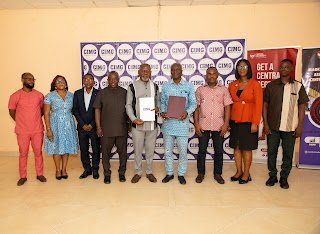
    The Chartered Institute of Marketing,
    Ghana (CIMG) and Central University have officially signed a Memorandum of
    Understanding (MoU) at the University’s Miotso Campus, establishing a
    comprehensive framework for collaboration between the two institutions.

    This strategic partnership aims to bridge
    the gap between theory and industry practice through initiatives in
    accreditation, internships, research, innovation, and professional development,
    ensuring that graduates are equipped with globally competitive, market-ready
    skills.

    Speaking at the signing ceremony, the
    National President of CIMG, Mr. Michael Abbiw, reiterated the Institute’s
    mission to set the highest standards for marketing practice in Ghana.

    “This partnership reflects our commitment
    to setting the highest standards for marketing practice in Ghana. By providing
    students with access to professional certification, mentorship, internships,
    and direct industry exposure, we are helping to bridge the gap between academic
    learning and professional practice,” he stated.

    On his part, the Pro Vice-Chancellor of
    the University, Prof. Stephen Abbeny-Mickson, highlighted the importance of
    strategic industry partnerships in preparing students for the demands of the
    modern workplace: “The collaboration will equip students with practical skills,
    enhance their employability, and ensure that academic programmes remain aligned
    with evolving industry needs.”

    “This is a long-overdue milestone. By
    bridging the gap between academic rigor and professional standards, we are
    creating a seamless transition for students from the lecture hall to the
    corporate world, while responding directly to the changing demands of the job
    market, where employability is increasingly defined by a blend of theoretical
    knowledge and practical application,” he added.

    The MoU outlines key areas of
    collaboration focused on strengthening both academic and professional
    development. These include support for the accreditation and development of
    marketing programmes to ensure alignment with industry standards, joint research
    initiatives to advance knowledge and innovation in the field, and
    capacity-building opportunities for faculty through training, certification,
    and professional membership.

    The partnership will also facilitate
    practitioner-led lectures to bring real-world insights into the classroom,
    while positioning Central University as an accredited study centre for CIMG
    programmes, subject to approval in line with Section 8(3)(b) and Section 10(3)
    of the Education Regulatory Bodies Act, 2020 (Act 1023).

    MEDIA CONTACT

    Clarence Pappoe

    CIMG Project Office

    Rev J. J. Martey Block

    UPSA Campus

    Digital
    Address: GT-345-5821

    Tel:
    0242307801

    Email: communications@cimghana.org

    ABOUT CIMG

    The Chartered Institute
    of Marketing, Ghana (CIMG) was founded in July 1981 with the vision to be the
    voice of marketing practice in Ghana under the Professional Bodies Registration
    Act 1973 (NRCD143). The Institute aims at seeing both private and public
    organizations embrace the marketing concept and be marketing-oriented in their
    operations. In 2020, the CIMG received a Presidential Charter by the passage of
    the Chartered Institute of Marketing, Ghana Act, 2020 (Act 1021) with the main
    objects to set standards for the practice of marketing and to regulate the
    practice of the marketing profession in the country. In 2023, the CIMG
    Regulations (L.I. 2479) was passed by the Parliament of Ghana and has therefore
    come into force to enable the Institute execute its mandate and functions as
    stipulated in the CIMG ACT 2020 (Act 1021).Marketing is fundamental to the
    success of any business and the Chartered Institute of Marketing, Ghana, plays
    a major role in promoting the marketing profession, encouraging organisations
    to strive towards maintaining international standards in their marketing
    practice.

    ABOUT CENTRAL UNIVERSITY

    Central University is an educational Initiative
    of the International Central Gospel Church (ICGC). It has its origins in a
    short-term Pastoral training institute, which was started in October 1988 by
    ICGC. It was later incorporated, in June 1991 under the name, Central Bible
    College. In 1993, the name was changed again to Central Christian College. The
    College later upgraded its programmes to the baccalaureate level, and in line
    with national aspirations, expanded its programmes to include an integrated and
    practice oriented business school, named Central Business School. To reflect
    its new status as a liberal arts tertiary institution, the university was
    re-christened Central University College in 1998. The National Accreditation
    Board has since accredited it as a tertiary Institution. It is co-educational
    with equal access for male and female enrolment. Central University has nine
    (9) faculties/schools, namely the Central Business School (CBS), the School of
    Architecture and Design (SADe), School of Graduate Studies (SGS), Faculty of
    Arts and Social Sciences (FASS), Central Law School (CLS), School of Pharmacy
    (SOP), School of Engineering and Technology (SET), the School of Medical
    Sciences (SMS) and the School of Nursing and Midwifery (SNM). In January 2016,
    the University College received the long awaited Presidential Charter to become
    an autonomous and a fully-fledged university as Central University.

  • Importers and Exporters Association of Ghana (IEAG) Supports Ghana Shippers’ Authority Directive on Container Administrative Charges

    Importers and Exporters Association of Ghana (IEAG) Supports Ghana Shippers’ Authority Directive on Container Administrative Charges


    The
    Importers and Exporters Association of Ghana (IEAG) wishes to state, in
    unequivocal terms, its strong support for the recent directive issued by the
    Ghana Shippers’ Authority to streamline and cap Container Administrative
    Charges (CAC) at Ghana’s ports. This intervention is not only timely but long
    overdue.

    For
    decades, importers, exporters, and Ghanaian businesses have borne the brunt of
    excessive, opaque, and, in many instances, unjustified administrative charges
    imposed by international shipping lines and their local agents. These charges,
    commonly referred to as local handling charges, have significantly inflated the
    cost of doing business and undermined Ghana’s competitiveness as a trade hub.

    The
    Association notes with concern the recent threats issued by certain shipping
    line workers. We wish to make it clear that such threats will not deter
    regulatory action in the national interest.

    The global
    shipping industry operates on well-established commercial principles where
    freight charges, surcharges, and ancillary fees, including demurrage and
    detention, are revenue streams accruing directly to the shipping lines
    (carriers). Industry data and global shipping practices confirm that:

    Ocean
    freight is the primary revenue of carriers, covering vessel operations, fuel
    (bunker), and capital expenditure.

    Demurrage
    and detention charges, paid when containers overstay at ports or outside
    terminals, are also collected and retained by shipping lines, contributing
    significantly to their ancillary income streams.

    These
    revenues are typically repatriated to parent companies abroad, resulting in
    substantial foreign exchange outflows with limited direct fiscal benefit to the
    Ghanaian state.

    Against
    this backdrop, it is disingenuous for shipping lines to suggest that Container
    Administrative Charges are essential for their operational sustainability in
    Ghana.

    Clarification
    on Cost Structure and Freight Pricing

    It is
    important to place on record that all legitimate port-related costs incurred by
    shipping lines in Ghana, such as port dues, pilotage, towage, berth charges,
    and terminal handling charges, are already embedded within the ocean freight
    rates charged to importers and exporters.

    In
    shipping economics, this is standard practice: Freight rates are structured
    using a cost-recovery and margin-based pricing model, where carriers factor in
    origin and destination port costs, operational overheads, and market
    conditions.

    Whether
    freight is prepaid (at origin) or collect (at destination), these costs are
    ultimately borne by the cargo owner, not the shipping line.

    Therefore,
    the imposition of separate Container Administrative Charges at destination
    constitutes a duplication of cost recovery, effectively making Ghanaian
    importers pay twice for the same service components.

    The
    IEAG maintains that these charges are unwarranted and outdated.

    Historically,
    the Container Administrative Charge was introduced in the late 1980s, at a time
    when vessels calling at Ghanaian ports were required to deploy ship-mounted
    gear (geared vessels) to facilitate cargo operations due to limited port
    infrastructure. However, this justification no longer holds.

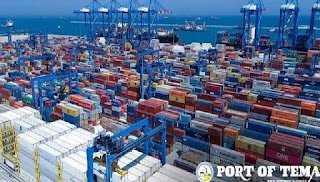
    Today,
    Ghana’s ports, particularly Tema Port and Takoradi Port, are equipped with
    state-of-the-art container handling infrastructure, including: Ship-to-Shore
    (STS) gantry cranes, Rubber-Tyred Gantry (RTG) cranes, Automated terminal
    operating systems (TOS), modern quay and yard facilities capable of handling
    large container vessels

    These
    advancements have eliminated the operational conditions that originally
    justified the CAC. Its continued application is therefore technically
    indefensible and economically exploitative.

    On
    Employment and Welfare Claims

    The
    argument that the directive will adversely affect employee welfare is
    misplaced.

    Shipping
    lines operating in Ghana are agents of international principals (carrier
    owners). Under standard maritime business structures, the principal is
    responsible for all operational expenditures, including staff remuneration,
    insurance, pensions, and other benefits.

    Local
    administrative charges such as CAC are not designed to fund employee
    compensation, but rather have evolved into additional revenue streams.

    It is
    therefore inappropriate to suggest that Ghanaian businesses should continue to
    bear unjustified charges to subsidize employment conditions that are the
    responsibility of multinational shipping corporations.

    Economic
    Impact and National Interest

    The scale
    of the issue cannot be ignored. Available industry estimates indicate that in
    2024 alone, Ghanaian shippers and traders paid approximately GH₵1.69 billion
    (about USD 108.32 million) in Container Administrative Charges. This represents
    a substantial cost burden on trade and a major contributor to high import
    prices and inflationary pressures.

    At a time
    when Ghana is pursuing trade facilitation, cost competitiveness, and regional
    hub status, such charges are counterproductive.

    Support
    for the GSA Directive

    The IEAG
    fully endorses the decision by the Ghana Shippers’ Authority to cap the
    Container Administrative Charge at GHS 550 per Twenty-Foot Equivalent Unit
    (TEU), effective 1st May 2026.

    This cap
    represents: a reasonable and proportionate ceiling, a balanced regulatory
    intervention that protects shippers while allowing operational flexibility, and
    a step toward eliminating unjustified cost build-ups within the logistics chain.

    The IEAG
    reiterates that the era of unchecked and opaque charges in Ghana’s shipping and
    logistics sector must come to an end.

    We commend
    the Ghana Shippers’ Authority for its decisive action and urge all stakeholders
    to comply fully with the directive in the interest of fairness, transparency,
    and national economic growth.

    Attempts
    to resist or undermine this reform through threats or pressure tactics will not
    succeed.

    Signed

    Samson
    Asaki Awingobit

    Executive
    Secretary

    Tel:
    0243575046

  • Ghana’s Digital Future Depends on Who Controls Its Infrastructure.

    Ghana’s Digital Future Depends on Who Controls Its Infrastructure.


    By: Ing Joseph
    Koranteng

    Digital Realty
    in Ghana.

    Ghana’s economy is rapidly becoming
    more digital. Each day, millions of transactions flow through mobile money
    platforms, banks depend on real-time systems to serve customers, and
    businesses increasingly operate through digital channels. T
    his digital shift has delivered greater speed, efficiency, and new
    opportunities. Yet it has also deepened our dependence on something many
    people rarely notice — the underlying infrastructure that makes it all
    possible.

     As this
    dependence grows, a more important question begins to emerge. Who controls the
    systems behind Ghana’s digital economy?

    This is what we
    mean by digital sovereignty. It is often explained as where data is stored, but
    that is only part of the story. Sovereignty is about control. It is about
    ensuring that data, systems, and digital services operate within an environment
    that is secure, reliable, and independent. It is about making sure that
    critical parts of the Digital Ecosystem are not exposed to risks outside our
    control.

    Today, Ghana is
    making strong progress in digital adoption. Fintech is expanding, mobile money
    continues to grow, and businesses are increasingly moving online. But the
    infrastructure supporting this growth has not always kept pace. There are still
    gaps that expose the system to risk.

    One of the most significant risks is
    resilience. Power instability, network interruptions, and limited redundancy
    can disrupt services quickly. In a digital economy, even brief outages can
    create widespread impact. Payments may fail, services can go offline, and
    businesses risk losing customer trust. For the user, the effects can be
    immediate — from being unable to complete a transaction or book a ride, to
    being prevented from accessing critical health services at a hospital.

    Another risk is
    dependence. Many organisations still rely on systems or platforms that are not
    fully within their control. This includes hosting data outside the country or
    relying on infrastructure that is tied to external providers. While these
    solutions may work in the short term, they create long-term exposure. When
    critical systems depend on environments you do not control, your ability to
    manage risk is limited.

    This is why the
    conversation around digital sovereignty must evolve. It is not just about
    location. It is about the nature of the platform itself.

    Sovereignty is
    not just where your data is. It is who controls the platform or the
    infrastructure behind it.

    True
    sovereignty requires neutral infrastructure.
    This covers infrastructure hosted or
    operated by parties other than the main connectivity and platform providers
    . It means a platform that does not access or manage customer data
    and does not introduce external dependencies that could conflict with national
    priorities. Neutrality strengthens independence and enables a market where
    businesses benefit from diverse alternatives. It ensures that businesses,
    institutions, and governments maintain full control over how their systems are
    designed and operated.

    While control
    matters, the bigger question is growth. The right infrastructure enables
    entities to expand seamlessly, supporting future demand without significant
    increases in cost or complexity. This makes a market more attractive to
    investors, who increasingly look at infrastructure as a signal of stability and
    readiness.

    However, there
    is an additional dimension that is frequently overlooked. Modern digital
    infrastructure is no longer just about physical facilities. It is about
    creating environments where the entire digital economy can come together. A
    strong infrastructure platform acts as a meeting point. It brings together
    Connectivity and cloud providers, Fintechs, Enterprises, and Technology
    partners in one meeting place. Businesses can connect directly, exchange data
    more efficiently, and build new services faster. Innovation becomes easier
    because the building blocks are already connected.

    This kind of
    ecosystem is what drives real digital growth. It reduces complexity, lowers
    barriers, and allows companies to focus on creating value rather than managing
    fragmentation.

    Ghana has a
    clear opportunity in this space. The country has already established itself as
    a leader digital services in the region. With the right infrastructure, it can
    extend this position and become a true hub for digital activity in West Africa.

    Achieving this
    will require more than continued adoption of technology. It will require
    deliberate investment in infrastructure that is resilient, neutral, and
    interconnected. It will require platforms that support both control and
    collaboration. It will require a shift in how we think about infrastructure,
    not as a background function, but as a strategic asset.

    The future of
    Ghana’s digital economy will not be defined only by how quickly we innovate. It
    will be defined by how well we build the infrastructure that supports that
    innovation.

    Digital
    sovereignty is part of that foundation. It ensures that growth is not only
    fast, but also secure and sustainable. It gives businesses the confidence to
    scale, institutions the ability to operate reliably, and the country the
    strength to compete in a connected world.

    If Ghana is to
    fully realise its digital potential, the focus must now move from adoption to
    control, from systems to platforms, and from isolated infrastructure to
    connected ecosystems.

    That is what
    will define the next phase of growth.

  • Strong Majority Backs Giving Nature Legal Rights in Ghana

    Strong Majority Backs Giving Nature Legal Rights in Ghana


    The Rights
    of Nature Ghana Movement (RoNAG) has concluded its 2-year socio-legal study
    that
    explored how Ghana can recognize
    and protect the Rights of Nature (RoN) within its legal and governance system
    s. The study
    was titled ‘
    Assessing
    Legal Frameworks and Stakeholder Perspectives on Integrating the Rights of
    Nature into Ghana’s Environmental Governance
    ’ funded by the Gower Street
    Trust, U.K.
    The
    concept of the Rights of Nature acknowledges that ecosystems
    , such as rivers, forests,
    and wildlife
    , are not mere resources or objects to be exploited, but living entities
    w
    ith
    inherent rights to exist, thrive, and regenerate.
    The study was conducted to support the
    Rights of Nature Ghana
    Movement’s (RoNAG) reform campaign. The research evaluates
    Ghana’s environmental laws, examines international best practices, and gathers
    perspectives from key stakeholders across five regions. The findings indicate
    overwhelming public support
    , approximately
    90.5%
    for granting legal
    recognition to nature. The study concludes that adopting a Rights of Nature
    framework could strengthen environmental protection, promote sustainable development,
    and help Ghana meet its national and international climate and biodiversity
    commitments.

    The
    study in Brief

    Ghana’s
    existing environmental laws are analysed. The study also surveyed the
    acceptance rate of the international Rights of Nature (RoN) initiatives by
    gathering views from many stakeholders. It found overwhelming support of about
    90.5% in favour of giving nature legal recognition. It revealed that RoN
    principles, such as fishing taboos and prohibitions on cutting in sacred
    groves, are already embedded in customary laws and practices. Illegal
    small-scale gold mining (“galamsey”) is among the greatest environmental
    threats, and the problem persists due to weak enforcement of domestic
    environmental laws. To eliminate environmental degradation, current
    environmental laws should be updated to recognize nature’s rights, and
    enforcement strengthened. The study recommends enshrining nature’s rights in
    the laws of Ghana, reversing forest-mining permissions (e.g., canceling L.I.
    246), and working with government agencies (MESTI, EPA, Forestry Commission,
    Parliament, District Assemblies), NGOs (RoNAG, A Rocha Ghana), the education
    system (Ministry of Education, GES, universities), and traditional/local
    leaders to protect rivers and forests.

    Purpose and Significance

    The
    Earth and its ecosystems have fundamental rights to exist, live, and thrive,
    and this study was conducted to promote their legal recognition. In practice,
    this means helping Ghana’s government consider passing a RoN Act and amending
    some of its existing environmental laws so that rivers, forests, and other
    ecosystems can have legal standing. This change is needed urgently because
    Ghana is facing serious environmental decline, and its environmental laws today
    treat nature mainly as a resource for people rather than as a rights-bearing
    entity. The study highlights the adoption of new legal approaches (often called
    ecocentric or Earth-centered) worldwide. Ghana needs to catch up if it is to
    meet biodiversity and climate targets. The study specifically supports the
    Goals of the RoNAG campaign, which seeks to integrate nature’s rights into
    Ghana’s law.

    Study’s Objectives

    1.       To
    analyse Ghana’s existing environmental laws and regulations in the context of
    RoN.

    2.      
    To review global RoN
    initiatives and draw lessons for Ghana.

    3.      
    To assess stakeholder
    awareness and understanding of the RoN.

    4.      
    To identify opportunities
    and challenges for integrating RoN into Ghana’s governance.

    5.      
    To propose legal and
    policy measures for effectively including RoN in Ghana’s environmental laws.

    Key Findings


    Finding for Objective 1

    Ghana’s
    current laws are largely “anthropocentric,” in that they focus on how
    people use resources rather than granting rights to nature itself. For
    instance, government officials understand and explain that the Constitution and
    other environmental laws primarily aim to regulate resources for
    sustainability. They do not recognize nature as an entity with inherent rights.
    Further, no existing law explicitly grants rivers, forests, or other natural
    entities legal standing. The study shows that Ghana’s main environmental laws
    (like the EPA Act) treat nature as a resource to be managed for human benefit.

    This
    shows that Ghana’s legal system currently does not recognize nature’s inherent
    rights and will require new or amended laws to grant nature legal standing. The
    study concludes that to integrate a RoN concept into Ghana’s laws, its
    Constitution, the Environmental Protection Act, and mining laws must factor in
    the protection of ecosystems, not just human land use.

    Finding for Objective 2

    International
    examples show that declaring nature’s rights can strengthen conservation. A
    critical milestone was Ecuador’s 2008 Constitution, the first national
    constitution that identifies nature as a rights holder. Court rulings on rivers
    in India and New Zealand, and other legal advances elsewhere, set the precedent
    for Ghana. Emphasis is placed on learning from these experiences. However, to
    make these reforms possible, political backing and funding are strongly needed.

    The
    study concludes that Ghana can learn from global experiences. The RoN reforms
    often work when the public and courts understand them. In addition, they should
    incorporate the RoN principles into the constitution and other environmental
    laws, using unambiguous language that clearly recognizes nature’s rights.

    Finding for Objective 3

    Although
    many are not familiar with the global RoN concept, support for instituting RoN
    among Ghanaian stakeholders is broad. The survey results showed 90.5%
    endorsement of the idea of nature having rights. In interviews, people from
    different backgrounds (EPA officers, farmers, students, and traditional
    leaders) across all five regions reacted positively. They often echoed viewing
    nature’s rights in terms of “intergenerational justice” (fairness to
    future generations). No group opposed it; concerns focused mainly on how to
    enforce the new rights.

    With
    nearly universal stakeholder support, Ghana already has a constituency for RoN
    reforms. This broad acceptance is encouraging. However, that enthusiasm must be
    matched by public education and involvement so that they can concurrently
    support and enforce nature’s rights anywhere.

    Finding for Objective 4

    Many
    traditional beliefs already respect nature and make sure it’s properly
    protected. The study noted customary rules, such as fishing taboos on certain
    days and the designation of “sacred groves” as areas where cutting is
    forbidden, as being in alignment with the RoN principles. These cultural
    practices treat water bodies or forests as worthy of special protection. This
    already existing local alignment with RoN ideas signifies a strong opportunity
    for reform.

    Customary
    practices show that protecting nature for its own sake is not new to Ghanaian
    society. Since traditional values already align with RoN ideals, reforms to
    domestic environmental laws can build on what communities already practice. The
    study suggests the need to formally recognise and work with traditional
    authorities, because they already enforce sacred sites and taboos.

    Finding for Objective 5

    Illegal
    small-scale mining (galamsey) emerged as the biggest environmental threat,
    recurring across all regions visited. Small-scale illegal mining has moved from
    a traditional, low-impact activity into a mechanised industry where bulldozers,
    excavators, and toxic chemicals are used. This has necessitated the adoption of
    the Rights of Nature framework in Ghana to curb the catastrophic, illegal
    activity. Statistically, the exceedingly high turbidity in many major rivers
    makes water treatment by the Ghana Water Company Limited difficult. For
    instance, turbidity levels as high as 11,000 NTU (Nephelometric Turbidity
    Units) lead to pump failures and exorbitant water treatment costs (Adom, 2025).
    Apart from contaminating water bodies, artisanal and industrial mining waste
    causes respiratory diseases such as pneumonia and silicosis, with a direct
    impact on human health (Ofori, 2022). In addition, the findings revealed that
    enforcement failure is the dominant reason environmental degradation is
    advancing with impunity. The study found that enforcement failures result from
    a lack of resources and political will.

    It
    was proposed that quantifying ecosystem services and linking them to
    international finance mechanisms such as REDD+ will provide the necessary
    financial resources and make RoN policy implementation more attractive to
    politicians. This will implement the proposed three-tier reform framework
    plausibly:

     Tier 1: Immediate Statutory Targets (0–2
    years)

                     
    Initiate legislative
    review and repeal of LI 246 (permits mining in forest reserves).

                     
    Repeal Section 18 of the
    Minerals and Mining Act (allows mining entry into forest reserves).

                     
    Expand Act 29, Section
    303 to cover fish, aquatic life, and plants — the most tractable immediate
    rights of nature reform with minimal political resistance.

                     
    Operationalise the
    Environmental Protection Act 2025 (Act 1124) and its implementing regulations
    with full enforcement capacity.

                     
    Commission alternative
    livelihood programs in galamsey-affected communities as a prerequisite for
    escalating enforcement.

    Tier
    2: Institutional and Structural Reform (1–3 years)

                     
    Separate conservation and
    extraction mandates at the ministerial level (addressing the conflict of
    interest architecture identified by the Ashanti Region Wildlife Division
    officer).

                     
    Establish hybrid guardian
    institutions that formally integrate traditional authority, EPA, and civil
    society organisations into an ecosystem governance framework.

                     
    Create specialised
    environmental courts or chambers with trained judges and expedited procedures.

                     
    Establish inter-agency
    coordination mechanisms (EPA, Minerals Commission, Water Resources Commission,
    Fisheries Commission, Forestry Commission) with a unified ecosystem protection
    mandate.

                     
    Launch a Payment for
    Ecosystem Services framework linking carbon credit revenues to community
    conservation incentives.

    Tier
    3: Constitutional and Long-term Systemic Reform (3+ years)

                     
    Pursue a constitutional
    amendment recognizing natural entities as rights-bearing.

                     
    Enact a standalone Rights
    of Nature Act incorporating legal personhood, guardian institutions, and
    accountable traditional authority provisions.

                     
    Integrate rights of
    nature principles into national school curricula.

                     
    Establish a National
    Environmental Ombudsman with standing to initiate environmental litigation on
    behalf of natural entities.

                     
    Develop a community
    benefit-sharing framework that distributes carbon credit and conservation
    revenues to communities adjacent to protected areas.

    Recommendations

    Government and Regulatory Agencies.

    We recommend that the Ministry of
    Environment, Science, Technology, and Innovation, in consultation with
    Parliament, draft a RoN Act or undertake steps to amend the Constitution to
    give legal personhood to natural entities. This will build on Act 1124, which
    underscores the Precautionary Principle in environmental undertakings. In
    addition, such Acts as the Environmental Protection Act (EPA Act), Forestry
    Commission Act, and others should be amended to uphold nature’s right to exist,
    live, and thrive. For instance, Act 2022 L.I. 2462, which allows mining in
    forest reserves, should be amended to recognise nature’s existential rights.
    Furthermore, enforcement institutions should be elevated in status to enable
    them to handle flagrant violators with the most severe punishment. Some study
    participants suggested that EPA should be given greater authority. We also
    recommend granting it greater autonomy and resources to ensure that
    environmental laws are properly adhered to. In the same vein, the Forestry
    Commission and Water Resources Commission should be given the same mandate.
    Moreover, the Municipal and District Assemblies (MMDAs) and District Chief
    Executives (DCEs) should be drawn into the implementation processes. For
    instance, the District Environmental Committees should be made to consider
    ecosystem rights when doing land-use planning.

    Education and Academia

    The Ministry of Education and the Ghana
    Education Service should add RoN and environmental ethics curricula into
    Ghanaian schools at all levels. The curricula should emphasise traditional
    environmental laws, climate change, and local conservation practices at an
    early age. Universities and research institutes should develop courses and
    degree programs in environmental law that include the Rights of Nature.
    Additionally, research institutes and funding agencies should fund graduate
    studies and research projects that assess RoN implementation.


    Civil Society Organisations

    CSOs should create public awareness through
    community training and public education on nature’s rights. They should run
    many sensitization campaigns that highlight protecting nature as an act of
    intergenerational justice. Further, they should use the law courts to promote
    the RoN principle in Ghana’s environmental legal frameworks. Moreover, CSOs
    should train EPA staff, judges, and local officials on Rights-of-Nature
    concepts in partnership with the government and international donors.


    Traditional Authorities and Local Communities

    Indigenous knowledge researchers must partner
    with local communities to document the traditional taboos, sacred groves, and
    other local practices that align with RoN. District Assemblies should draft
    bylaws to legally protect natural entities. Highly respected local authorities,
    such as chiefs, queen mothers, and assembly members, should be appointed and
    monitored as Guardians of Nature for specific entities, such as trees or
    rivers. These local guardians should work with the police to protect nature’s
    interests.


    Conclusion

    This study demonstrates
    that integrating the Rights of Nature into Ghana’s environmental governance is
    both feasible and widely supported. By aligning legal reforms with cultural
    traditions, stakeholder expectations, and global best practices, Ghana can establish
    a transformative framework for ecological protection and sustainable
    development.

    Dr Dickson Adom, Director and Lead Campaigner of RoNAG