Author: VEK

  • Zoomlion Swiftly Investigates Concerns Raised at PAC Hearing, Restores Cleanliness in Asante Akyem South Municipality

    Zoomlion Swiftly Investigates Concerns Raised at PAC Hearing, Restores Cleanliness in Asante Akyem South Municipality


    Zoomlion Ghana Limited has moved swiftly to address sanitation concerns in the Asante Akyem South Municipality after allegations were raised by the Municipal Chief Executive (MCE), Hon. Maame Safoah Appiah, during a recent sitting of Parliament’s Public Accounts Committee (PAC) in Kumasi.

    During the PAC hearing held on April 21, 2026, the MCE of Asante Akyem South Municial raised concerns over refuse spillages at communal container sites in her Constituency, deteriorated waste containers, and also alleged that she had personally paid for fuel to support waste evacuation in the municipality.

    Given the seriousness of the concerns raised at the national forum, Zoomlion immediately engaged the MCE at the venue of the hearing, and assured her that the issues would be investigated and resolved without delay.

    True to that commitment, the company dispatched a high-powered team to the municipality the very next day, April 22, to undertake a full-scale investigation into the allegations and assess the sanitation situation on the ground.  

    The team, made up of senior officials including the Chief Internal Auditor, Group Head of Internal Control, General Manager of Zoomlion, Regional Coordinator, District Manager and Operations Assistant, went to the municipality to meet and discuss the issue with the MCE and her team on the 22nd of April, before embarking on field inspections across the municipality.

    As part of the investigation, the team visited nine communal container sites, inspected the landfill site, engaged military personnel responsible for fuel management, and interacted with the Municipal Head of Environment.

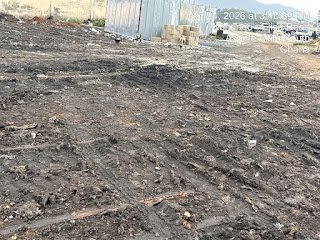
    The investigation confirmed that there were significant waste spillages at all the communal container sites visited, while two containers required urgent repairs and two others needed immediate replacement. Five containers were however found to be in very good condition.

    The team further identified the operational challenge that contributed to the unfortunate situation, which was as a result of delays in fuel supply, due to shortage of fuel at the specific GOIL filling station, which was the only approved fuel supplier for that municipality, at the time.

    The report also clarified that contrary to claims made at the PAC hearing, the MCE had not personally paid for fuel for waste evacuation. Rather, the honourable MCE had offered to do so through her Municipal Environmental Health Officer (MEHO) on the morning of April 21, but the staff of Zoomlion had declined the offer, because fuel had then become available at the Goil station at that time.  

    Following the findings, Zoomlion immediately rolled out corrective measures on the same day, 22nd April to restore cleanliness in the municipality.

    The company spent close to GHS20000 to hire machines, buy fuel and pay workers to evacuate and clean all the waste in the municipality. The company thanks the honourable MCE who supported the company with additional trucks.

    The company apologises for the situation, and assures the honourable MCE and residents of its commitment of restoring sanitation standards and preventing future occurrences.

    Following these interventions, refuse at all the affected sites was duly evacuated with dispatch, and cleanliness has significantly been improved across the municipality.

    Zoomlion has further initiated long-term measures, including plans to supply additional containers, repair faulty trucks, expand fuel supply options, and reinforce its “Operation No Spillage” initiative to ensure sustained sanitation service delivery in Asante Akyem South municipality and all other areas where it has operational mandates.

    The company reiterates its commitment to partnering Metropolitan, Municipal and District Assemblies across the country to maintain clean and healthy communities. ‎

  • Lawyer Paul Twum-Barimah urges NPA to scrap fuel price floor

    Lawyer Paul Twum-Barimah urges NPA to scrap fuel price floor


    A lawyer and former Member of Parliament for Dormaa East, Paul
    Apreku Twum-Barimah, has called on the National Petroleum Authority (NPA) to
    immediately abolish the fuel price floor policy, arguing that it weakens
    competition and contradicts the core principles of deregulation in Ghana’s
    downstream petroleum sector.

    In a statement, Mr. Twum-Barimah emphasised that the current
    policy, which sets a minimum retail price for petroleum products, has
    effectively restricted Oil Marketing Companies (OMCs) from leveraging their
    operational efficiencies to offer lower prices to consumers.

    He contends that several OMCs possess the capacity to sell
    petrol and diesel below the prescribed minimum price but are unable to do so
    due to regulatory constraints imposed by the NPA.

    “I know some oil marketing companies who can sell petrol and
    diesel below the current rate, but because of the floor price set by the NPA,
    their hands have been tied,” he stated.

    Mr. Twum-Barimah argued that this limitation has undermined the
    competitive dynamics expected under a deregulated regime, where market forces,
    rather than regulatory controls, are meant to determine pricing.

    He further noted that recent volatility in global oil markets,
    driven by geopolitical tensions involving the United States, Israel, and Iran,
    has created opportunities for some OMCs to source petroleum products through
    relatively cheaper or more secure supply routes.

    However, he maintained that the price floor policy prevents
    these companies from translating such cost advantages into reduced prices at
    the pump for consumers.

    “The deregulation policy was introduced to promote competition
    and efficiency in the downstream sector. The introduction of a price floor is
    effectively a form of price control, which defeats that objective,” he added.

    The intervention by the former legislator comes amid ongoing
    discussions within the energy sector following the NPA’s introduction of a
    minimum retail price for petroleum products in April 2024.

    At the time, the Authority justified the policy as a necessary
    measure to address what it described as “unhealthy competition” among OMCs and
    to ensure stability within the downstream petroleum market.

    However, critics, including Mr. Twum-Barimah, argue that while
    the policy may have been intended to stabilise the market, it risks distorting
    competition and denying consumers the benefits of lower fuel prices that could
    arise from efficiency and innovation within the sector.

    The debate over the fuel price floor continues to generate
    divergent views among policymakers, industry players, and energy analysts, as
    questions persist over the appropriate balance between regulation and market
    freedom in Ghana’s petroleum pricing regime.

  • The Children’s Heart Foundation Ghana funds lifesaving surgeries  for two children

    The Children’s Heart Foundation Ghana funds lifesaving surgeries for two children

     Today, The Children’s Heart Foundation
    Ghana celebrates a moment of hope, funding lifesaving open-heart surgeries for
    two children born with congenital heart disorders. The presentation took place
    at the Cardiothoracic Centre of Korle Bu Teaching Hospital, where these
    life-changing procedures will be carried out, giving the children a renewed
    chance at life.

     This milestone was made possible through a
    beautiful convergence of generosity. The Australian High Commissioner to Ghana
    (H.E. Berenice Owen-Jones), inspired by her own journey as a mother of a child
    who once required heart surgery, helped mobilise critical funds through the
    Melbourne Cup charity fundraiser. Complementing this, additional funding was
    generated through the Foundation’s recent Health Walk, powered by the energy
    and compassion of over 100 students and staff from Tema International School,
    SOS Hermann Gmeiner College, and Al-Rayan International School. Their efforts
    added significant value to our fundraising initiative and continue to support
    the Foundation’s work to raise awareness and mobilise resources for children
    living with congenital heart disorders.

     One child has already undergone successful
    surgery and is recovering well, while the second is scheduled in the coming
    weeks.

     Now 15 years strong, The Children’s Heart
    Foundation Ghana has supported over 250 children with lifesaving surgeries, but
    the journey continues, with over 50 children still waiting for their turn. Can
    you help? Have a heart, save a life.

     A powerful reminder that together, we can
    make a difference

  • Parliament’s Sanitation Committee Praises Zoomlion’s IRECOP Concept, Calls for Improved Service Delivery Across MMDAs

    Parliament’s Sanitation Committee Praises Zoomlion’s IRECOP Concept, Calls for Improved Service Delivery Across MMDAs

    Chairman of Parliament’s Select Committee on Sanitation and Water Resources and Member of Parliament for Nkwanta North, John Oti Bless, has described Zoomlion Ghana Limited’s Integrated Recycling and Compost Plant (IRECOP) concept as one of the most viable modern solutions to waste processing in Africa.

    According to him, he consistently promotes the concept whenever he gets the opportunity as a legislator because of its potential for expansion across the continent.

    “Anywhere I find the opportunity as a legislator, I try to market the concept for international expansion because I believe it offers a sustainable solution to waste management challenges in Africa,” he said.

    Despite praising the innovation, Hon. Oti Bless noted that the Committee’s preliminary findings point to unsatisfactory sanitation management and challenges with the supply of communal waste containers in some  Metropolitan, Municipal and District Assemblies (MMDAs).

    He therefore urged Zoomlion Ghana Limited to aim at improving its efforts to better service delivery.

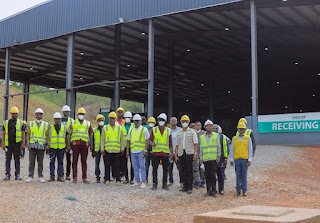
    He made the remarks when he led members of Parliament’s Select Committee on Sanitation and Water Resources on a working visit to the newly constructed IRECOP Plant at Mankessim on Thursday, April 23, 2026.

    Operations Manager of the Mankessim IRECOP facility, Kofi Mbiah, took the delegation through the facility after briefing them on its operations.

    He explained that the plant receives various forms of municipal solid waste and processes them into reusable materials.

    Mr. Mbiah disclosed that the facility is expected to employ between 400 and 500 workers and operate on a 24-hour basis, significantly contributing to job creation and reducing unemployment.

    The delegation also toured Medical Waste Treatment Plant, Mankessim, another facility owned by Zoomlion Ghana Limited.

    Operations Manager of the medical waste facility, Elias Botchway, explained that the plant uses an autoclave system to sterilize harmful microorganisms before the waste is passed through a shredding process and later through a boiler system to ensure it becomes environmentally safe for final disposal.

    According to him, the plant has the capacity to receive and process five tonnes of medical waste daily.

    Mr. Botchway added that the facility will employ more than 40 workers and operate around the clock.

    The visit formed part of the Committee’s oversight responsibility aimed at assessing sanitation infrastructure and waste management systems across the country. Mfantseman Assembly Commends Electoral Area Waste Initiative, Urges Stronger Collaboration with Zoomlion for Sustainable Waste Management

    The Municipal Chief Executive (MCE) for Mfantseman, Eric Stanley Acquah has called for stronger collaboration between Zoomlion Ghana and the assembly for improved service delivery for the environmental health needs of the people.

    He disclosed that the Assembly’s newly introduced Electoral Area Waste Management Programme is yielding positive results, with sanitation interventions already rolled out in 29 electoral areas out of the municipality’s 36 electoral areas.

    The MCE made this known during an engagement involving members of Parliament’s Select Committee, officials of the Assembly, other stakeholders and management of Zoomlion Ghana Limited (ZL), where sanitation delivery and operational challenges within the municipality came under review.

    According to the MCE, while the Electoral Area Waste Management Programme has significantly improved sanitation management at the local level, the Assembly remains hopeful that some aspects of Zoomlion’s service delivery will improve immediately to meet contractual requirements.u

    The MCE also identified the activities of informal waste collectors, popularly referred to as “junkies,” as one of the municipality’s major sanitation challenges.

    According to him, these individuals collect waste from traders and residents, receive payment for the service, but fail to transport the waste to designated final disposal sites, leading to indiscriminate dumping and environmental contamination across parts of the municipality.

    Mr. Acquah was worried that that even though there is no existing fumigation contract with any company in 2026 government still deducts money from their common fund for fumigation at source.

    Chairman of the Parliamentary Select Committee on Sanitation and Water Resources and MP for Nkwanta North Hon. John Oti Bless, acknowledged the concerns raised and assured stakeholders that the committee would engage the Administrator of the District Assemblies Common Fund to address issues surrounding deductions and sanitation financing arrangements.

    The Ranking Member of the Committee and MP for Achiase, Hon. Kofi Marfo  also stressed that assemblies should not be made to bear the consequences of inefficiencies in service delivery.

    He noted that waste management companies must be held accountable to their contractual obligations and urged Zoomlion management to improve operational efficiency.

    Responding to the concerns, the Central Regional Coordinator of Zoomlion Ghana Limited, Ernest Osei, highlighted the company’s longstanding commitment to the municipality, particularly during periods of public health emergencies.

    He recalled that during a cholera outbreak in Mfantseman, Zoomlion provided emergency financial support, chemicals, and undertook large-scale disinfection and fumigation exercises across the municipality to help contain the spread of the disease.

    Mr. Osei therefore called for stronger collaboration between the Assembly and Zoomlion, emphasizing that a healthy working relationship between both institutions remains critical to improving sanitation outcomes for residents.He added that Zoomlion has consistently supplied communal waste containers to various Metropolitan, Municipal and District Assemblies (MMDAs), including Mfantseman, and has remained committed to lifting waste regularly.

    He, however, noted that operational challenges such as equipment breakdowns, heavy rainfall, and indiscriminate dumping around communal containers occasionally disrupt waste evacuation schedules.

    Also addressing the meeting, Zoomlion’s Regional Vector Control Officer, Gideon Sogbey, dismissed claims of service lapses, explaining that several sanitation interventions undertaken by the company often go undocumented due to the longstanding relationship between both institutions.

    He maintained that Zoomlion has continued to provide extensive support beyond its formal obligations and called for a fair assessment of the company’s contributions to sanitation management in the municipality.

    The meeting underscored the need for improved coordination among assemblies, waste management service providers, and policymakers to address sanitation challenges and ensure cleaner communities across Mfantseman.

    The Parliamentary Select Committee on Sanitation and Water Resources is  currently undertaking a monitoring visit to the Central and Western Regions from Thursday, April 23 to Monday, April 27, 2026, as part of its constitutional oversight responsibilities within Ghana’s sanitation and water sectors.

    The visit is aimed at assessing the current state of sanitation services, evaluating the effectiveness of waste management systems, and gaining firsthand insight into the general sanitation situation in selected communities across the two regions.

    As part of the exercise, members of the Committee are engaging key stakeholders in the sanitation sector, inspecting selected waste facilities, and receiving technical briefings on sanitation management practices and interventions being implemented within the regions.

    The monitoring exercise underscores Parliament’s commitment to ensuring effective sanitation delivery, strengthening accountability, and supporting policies and interventions that promote a cleaner and healthier Ghana. Assin Fosu Assembly Commends Zoomlion’s Waste Collection Efficiency

    The Assin Fosu Municipal Assembly has commended Zoomlion Ghana Limited for its efficiency in waste collection services within the municipality, while raising concerns over gaps in its disinfection activities lately.

    This came to light during an engagement between officials of the Assembly and stakeholders on sanitation service delivery in the municipality.

    Chairman of the Parliamentary Select  Committee on Sanitation and Water Resources, Hon. John Oti Bless, stated that government’s decision to engage private companies in sanitation management was intended to improve service delivery, noting that Zoomlion remains the leading private sector player in Ghana’s waste management sector.

    He stressed that the committee was committed to ensuring fairness and objectivity in its assessment of sanitation services.

    “Our findings are supposed to be reported as they are and fairly,” he stated.

    According to him, the committee receives feedback from community members who monitor sanitation activities and submit reports on the performance of Zoomlion and other companies.

    He disclosed that the committee would compile its findings and formally present them to Zoomlion Ghana Limited to allow the company to respond before any further action is taken.

    Hon. Oti Bless also praised Zoomlion’s Integrated Recycling and Compost Plant (IRECOP) initiative, describing it as an innovative waste management model he has consistently promoted in various forums.

    “I have been marketing the IRECOP concept wherever I go because I believe it is a transformative solution,” he noted.

    He, however, identified disinfection services and the Sanitation Improvement Package (SIP) as key areas where improvement is needed.

    Responding to questions on the Assembly’s waste management strategy and utilization of government funding, the Municipal Coordinating Director Saaka Ibrahim, revealed that the Assembly had constructed ten mechanized boreholes this year and actively participated in all National Sanitation Day clean-up exercises.

    The District Environmental Health Officer, Agyare Emmanuel, also commended Zoomlion for its operational efficiency.

    He disclosed that the company currently supplies 11 waste containers to the municipality and has consistently ensured timely evacuation of waste.

    “They are lifting the containers perfectly and we have not recorded issues of vehicle breakdowns in a long time,” he said.

    Mr. Emmanuel further revealed that the Assembly has introduced a pay-as-you-dump waste disposal system, which has proven effective in improving sanitation management.

    Despite these gains, he identified the absence of a cesspit emptier as a major challenge, explaining that the Assembly currently relies on a private operator for liquid waste management services.

    He added that, with support from traditional leaders and transport unions, women have been engaged to clean transport stations and other public spaces that were previously handled by Zoomlion.

    On fumigation services, he acknowledged that while the exercise continues, it is not conducted frequently enough.

    “Fumigation goes on, but not too frequently, and we expect improvement in that area,” he stated.

    He further disclosed plans by the Assembly to procure aboboyaas to support the transportation of waste from communities to designated container sites.

    The discussions highlighted both the progress made in sanitation management in Assin Fosu and the need for stronger collaboration between local authorities, private waste management firms, and community stakeholders to address existing challenges
  • Metro Mass Transport to Deploy New Fleet at Accra 2026

    Metro Mass Transport to Deploy New Fleet at Accra 2026

    Metro Mass Transit Limited (MMTL), will deploy their latest fleet of buses to the 24th African Senior Athletics Championship scheduled to open in Accra on Monday, May 11, 2026.

    Mr. Kale Cezario, Managing Director of MMTL has assured the Local Organizing Committee (LOC), that “in demonstration of our commitment to excellence, we will deploy our new fleet of buses to facilitate transportation operations throughout the event period.”

     The new fleet is expected to be used for the first time for the championship which Ghana is hosting for the first time in four decades. 

    The buses are expected to be deployed for the transportation needs of the teams, athletes, backroom and technical personnel expected for the championship dubbed, Accra 2026.

    Mr Cezario said the “Management of MMTL is confident that, this collaboration will not only ensure seamless transportation for participants but also contribute significantly to delivering a memorable championship.”

    He assured that, “as a company committed to national development, we are pleased to provide safe and reliable transportation services for all participants expected for the championship.”

    About 2,000 athletes and officials are expected to arrive in Ghana from May 8, for the championship expected to bring together the continent’s finest track and field athletes.

    The competition is expected to open at the Legon Stadium on Monday, May 11 with an opening ceremony with the events starting the next day at the same venue.

    In all, there will be 44 disciplines on display for the five-day festival with both men and participating in 22 events each.

  • Level One refresher course for Technical Athletics Officials held

    Level One refresher course for Technical Athletics Officials held


    A refresher course for technical officials for the African Senior Championship held in Accra.

    70 participants took part in the course 

    The refresher course had a theory and practical components aimed at preparing the officials for the championship.

    The course has facilitators including Chief Supt. Bawah Alhassan who took the participants through focused areas for the championship.

    Dr. Timothy Mensah Director of Sports at KNUST, 

    and Cynthia Wise, National Deputy PE Coordinator,  Ghana Education Service took participants through different drills. 

    The four-day event saw participants going through a series of test cases, theoretical and practical in a bid to abreast them with current standards, trends and requirements for such high profile events. 

    Ghana is hosting the biannual event for the first time in its over four decades history. The championship, dubbed Accra 2026 is set to open with a grand ceremony on Monday, May 12, at the Legon Sports Stadium.

  • ‘Nestlé for Good’ Debuts in Ghana: Real Stories, Real Impact Across Nutrition, Planet and Communities

    ‘Nestlé for Good’ Debuts in Ghana: Real Stories, Real Impact Across Nutrition, Planet and Communities


    Nestlé Ghana has launched its ‘Nestlé for Good’ campaign, a regional initiative aimed at telling real beneficiary stories while delivering measurable impact in nutrition, environmental sustainability, and community development.
    Described as “how we translate our purpose into action in Ghana,” the campaign is Nestlé’s commitment to proactively share stories that make a positive difference for people and communities while running a responsible, sustainable business.
    Ghana becomes the third market to roll out ‘Nestlé for Good’ after Côte d’Ivoire and Nigeria. Other West African countries are set to launch soon, with plans to scale to Central Africa.
    Three Pillars, One Umbrella  
    The campaign rests on three key pillars:  
    1. Nutrition & Healthy Living: Tackling malnutrition through quality, affordable, fortified products. Examples include CERELAC variants — the regular option and CERELAC with No Refined Sugars — giving parents choices based on dietary preference. 
     
    2. Communities: Building resilient livelihoods. The Nestlé Cocoa Plan, active since 2015, supports ∼18,000 farmers across 11 districts with good agricultural practices, child labour monitoring, and deforestation prevention. In 2025, Nestlé started an income accelerator program providing €500 income support to farmers. Youth development includes annual internships with UG and KNUST, while Nestlé has backed the President’s Independence Day Awards for over 30 years, recognizing 52 top BECE students yearly.  
    3. Planet: Operating sustainably. Solar PV at the Tema factory spans 16,400 m² and generates over 2MW, displacing 30%+ of daytime power and saving 722 tCO2e. Project Tricycle, launched in 2019, has deployed 88 tricycles for plastic recovery, collecting more plastic waste since inception than the company used over the same period.
    Why Now? 
     
    “Nestlé Ghana is amplifying its impact now because trust is earned when you can show clear proof points,” panelists said. “People want to see how brands contribute to nutrition, livelihoods and environmental sustainability — not just what we sell, but how we operate.”
    To deliver, Nestlé is calling on employees, partners, and media to act as ambassadors. Internally, key messages are shared via everyday touchpoints, including creative lock screen messages. Media are invited to dive deeper into each pillar, access testimonials, and visit project sites for accurate, first-hand reporting.
    Industry Validation & Leadership  
    Seth Twum-Akwaboah of the Association of Ghana Industries noted the campaign is “long overdue,” citing Nestlé’s consistent wins in AGI’s Sustainable Manufacturing category over the past three years. The awards assess quality standards, employee well-being, safety, responsible sourcing, and environmental stewardship.
    Nestlé says it will lead by maintaining standards, aiming higher, and owning the narrative with verified data. “Consistency builds trust and gives others a model they can replicate,” the company said.
    What Success Looks Like in One Year  
    – Salome Azevedo, MD: “When testimonials of beneficiaries urge us on to do more, when employees become ambassadors, and consumers are happy to learn about real life-changing stories behind their favorite brands.”  
    – Patricia Ekaba, Corporate Affairs: “Clarity and consistency — employees, partners and media can explain ‘Nestlé for Good’ in the same simple way, using the same facts.”  
    – Seth Twum-Akwaboah, AGI: “When interventions are strong enough to be replicated — other companies see what works, adopt similar approaches, and collective private sector impact grows.”

  • Ghana’s non-traditional exports hit $5bn in 2025, up 30.7% – GEPA report

    Ghana’s non-traditional exports hit $5bn in 2025, up 30.7% – GEPA report


    Accra, April 17, GNA – Ghana’s
    non-traditional export (NTE) sector recorded $5.0069 billion in earnings in
    2025, representing a 30.7 per cent increase over the $3.83 billion achieved in
    2024, according to the Ghana Export Promotion Authority (GEPA).

    The performance reflects strong growth in
    value-added exports and signals the early impact of the Accelerated Export
    Development Programme, the Authority said at the launch of its 2025 NTE
    Statistics Report in Accra on Friday.

    Non-traditional exports refer to all export
    products other than the country’s traditional exports of cocoa, gold, crude oil
    and timber, and are seen as critical to diversifying Ghana’s economy and
    boosting foreign exchange earnings.

    The report showed that processed and
    semi-processed products continued to dominate the sector, contributing $3.09
    billion, a 52.78 per cent increase over 2024, and accounting for 83.47 per cent
    of total NTE earnings.

    Cocoa derivatives — including cocoa paste,
    butter and powder — remained the single largest contributor, making up 33.18
    per cent of the export basket.

    Agricultural exports also grew
    significantly by 37.82 per cent to $710.3 million, driven by cashew nuts, shea
    nuts and bananas, with yam exports recording a sharp 559 per cent increase.

    In terms of markets, Europe remained
    Ghana’s largest destination for non-traditional exports, generating $2.29
    billion, representing a 55.34 per cent increase.

    Africa accounted for 30.36 per cent of
    exports, largely driven by intra-ECOWAS trade, while North America recorded the
    highest growth rate at 82.40 per cent, and Asia grew by 14 per cent.

    The Netherlands emerged as Ghana’s leading
    export destination, followed by Burkina Faso, the United States, the United
    Kingdom, Togo, France, Italy, India, Côte d’Ivoire and Vietnam.

    Mr Francis Kojo Kwarteng Arthur, Chief
    Executive Officer of GEPA, said the sector’s performance demonstrated “a more
    competitive export base and expanding global reach.”

    “This level of performance, achieved with
    only 10 per cent of the import levy allocation, highlights the efficiency of
    our export promotion efforts and the strong return on investment,” he said.

    He appealed for an increase in GEPA’s share
    of the import levy from 10 per cent to 20 per cent to accelerate progress
    towards the Authority’s $10 billion export target by 2030.

    “If 10 per cent can generate over $5
    billion in export earnings, then 20 per cent will yield even greater results in
    foreign exchange generation, job creation and industrial transformation,” he
    added.

    Mr Arthur also highlighted key
    interventions undertaken by GEPA in 2025, including support for small and
    medium enterprises (SMEs) to participate in international trade fairs,
    facilitation of direct export shipments, and capacity-building programmes for over
    2,000 exporters.

    Mrs Elizabeth Ofosu-Adjare,  Minister of Trade, Agribusiness and Industry,
    called for tailored financing solutions to support SMEs, stressing the need for
    “patient and well-structured capital designed specifically to meet the unique
    needs of small businesses in the export sector.”

    In a statement read on his behalf, Dr
    Johnson Asiama, Governor of the Bank of Ghana, said the NTE sector contributed
    about 16 per cent of Ghana’s total export earnings of $31.2 billion in 2025.

    He noted that the sector played a crucial
    role in strengthening the country’s foreign exchange reserves, stabilising the
    cedi and anchoring inflation.

    “The NTE sector is therefore significant to
    Ghana’s macroeconomic stability and highlights the strong link between trade
    development and monetary policy,” he said.

    Dr Asiama called for deliberate policy
    interventions, including affordable financing, tax incentives and improved
    access to international markets, to sustain the sector’s growth.The launch was accompanied by an exhibition
    of a wide range of Ghanaian non-traditional export products.


    GNA

    April 17, 2026

  • Stanbic Bank Executives Highlight Ghana’s Evolving Financial Ecosystem

    Stanbic Bank Executives Highlight Ghana’s Evolving Financial Ecosystem


    Senior
    executives of Stanbic Bank Ghana have shared insights into Ghana’s rapidly
    evolving financial ecosystem with participants of the GIBS INSETA IMPD Women
    Immersion Programme, highlighting how digital innovation, capital markets and
    inclusive banking are shaping economic growth across emerging markets.

    The
    discussions formed part of the leadership immersion programme organized by the
    Insurance Sector Education and Training Authority (INSETA) in partnership with
    the Gordon Institute of Business Science (GIBS). The initiative brings together
    women leaders from South Africa’s insurance sector for a year-long development
    programme that combines academic training with international learning
    experiences.

    During
    the session, Kobby Bentsi-Enchill, Head of Investment Banking at Stanbic Bank
    Ghana, provided participants with a broad perspective on Ghana’s financial
    infrastructure and how it continues to evolve within the realities of a largely
    informal economy.

    He noted
    that digital financial services, particularly mobile money, have significantly
    reshaped the country’s payment landscape, extending financial access to
    millions of individuals and small businesses that previously operated outside
    the formal banking system.

    “Ghana’s
    financial architecture is unique because it sits at the intersection of formal banking
    and capital markets, and a very vibrant informal economy. Mobile money has
    played a transformative role in bridging that gap by bringing everyday
    transactions, micro-enterprises and small traders into a more structured
    financial environment.”

    He added
    that alongside use of digital innovation to harness savings and investments, the
    government securities market continues to play an important role in setting
    pricing benchmarks and maintaining financial stability, to support capital
    formation.

    “Public
    debt instruments such as treasury bills and bonds remain central to the
    functioning of Ghana’s financial markets,” he said. “They provide a stable
    investment vehicle for both individuals and institutions, while also creating a
    platform for capital mobilization that supports national development
    priorities.”

    According
    to him, the interplay between digital financial services, informal economic
    activity and established public finance instruments illustrates how emerging
    markets are developing hybrid financial systems that respond to both modern
    innovation and long-standing economic realities.

    Building
    on the discussion, Akua Oppong led participants through Ghana’s broader banking
    and insurance ecosystem, highlighting the complementary roles these sectors
    play in supporting economic resilience and risk management.

    She
    explained that while banks provide the capital required for expansion and
    investment, insurance institutions play a critical role in protecting
    businesses and individuals from unforeseen shocks.

    “When
    banking and insurance sectors collaborate effectively, they create a more
    resilient financial system. Access to credit alone is not enough, businesses
    also need risk protection, financial education and the right partnerships to
    sustain growth.”

    She
    added that strengthening cooperation between the two sectors can deepen
    financial inclusion, particularly for small and medium-sized enterprises (SMEs)
    operating in sectors such as agriculture, trade and manufacturing.

    “These
    sectors form the backbone of Ghana’s economy, and when financial institutions
    work together to support them, the impact extends beyond individual businesses
    to the wider economy,” she said.

    The
    final session of the day focused on the role of gender-focused banking
    solutions in promoting inclusive economic development.

    Sarfoa
    Appietu-Ankra, representing Women’s Banking within Business and Commercial
    Banking at Stanbic Bank Ghana, guided participants through the bank’s
    women-focused financial proposition and the growing importance of targeted
    support for women entrepreneurs.

    She
    explained that many women-led businesses continue to face structural barriers
    in accessing finance, mentorship and market opportunities, despite their
    growing contribution to economic activity.

    “Women
    entrepreneurs are playing a crucial role in sectors ranging from agriculture
    and retail to services and manufacturing. However, access to the right
    financial tools, guidance and partnerships is often the difference between
    survival and sustainable growth.”

    The
    sessions provided participants with a practical understanding of how Ghana’s
    financial institutions operate within an emerging market context, offering
    lessons on capital flows, financial innovation and inclusive economic policy.

    For the
    visiting delegation, the engagement formed an important part of the programme’s
    broader objective, to build a generation of women leaders capable of
    influencing transformation within Africa’s financial services sector.

    Caption:
    Stanbic Bank Executives with the participants of the immersion programme
    organised by  Insurance Sector Education
    and Training Authority (INSETA) in partnership with the Gordon Institute of
    Business Science (GIBS)

  • Beneath the Trees: A Promise for Tomorrow

    Beneath the Trees: A Promise for Tomorrow


    Have you
    ever paused beneath a tree on a scorching afternoon, letting the shade wash
    over you? That quiet moment of relief is just the beginning of what trees give
    us. Beyond the shade, beyond the rustling leaves, trees are quietly doing
    something remarkable, absorbing the very gases that are warming our planet.

    Trees
    are carbon sinks. Through photosynthesis, they pull carbon dioxide from the
    atmosphere and lock it away. Why does that matter? Because carbon dioxide
    accounts for approximately 75% of global greenhouse gas emissions and can
    linger in the atmosphere for hundreds, sometimes thousands, of years. That is
    not a small problem. That is a generational one.

    Several
    greenhouse gases drive global warming: methane, nitrous oxide, fluorinated
    gases, and carbon dioxide, the most widely emitted of them all. Together, they
    are disrupting weather patterns, threatening ecosystems, and placing enormous
    pressure on the natural systems we depend on daily.

    Here is
    how it works. The sun sends energy toward Earth. Under normal conditions, some
    of that energy warms the planet while the rest reflects back into space. But
    greenhouse gases trap the outgoing heat, forming an insulating layer around the
    Earth, the greenhouse effect.

    The more
    gases we emit, the thicker that layer becomes, and the more heat gets locked
    in. The consequences ripple outward: rising temperatures, erratic rainfall,
    intensifying floods, and shrinking biodiversity.

    The
    trajectory is concerning. But it is not irreversible, at least, not yet.

    What Can We Actually Do?

    Scientists
    and engineers are developing carbon capture technologies to support natural
    processes, and those innovations matter. But there is also a solution available
    to every single one of us, right now: planting and protecting trees.

    It
    sounds almost too simple. But incremental actions build meaningful change.
    Every tree planted contributes to the global goal of net-zero emissions by 2050,
    balancing the greenhouse gases we emit with the amount we remove, and limiting
    global temperature rise to 1.5°C above pre-industrial levels. That target is
    what stands between manageable climate change and catastrophic disruption.

    Around
    the world, countries and organizations are responding, shifting to cleaner
    energy, investing in electric vehicles, adopting solar power, and building
    sustainability into policy. The momentum is real. The question is whether we
    will add to it.

    A Story That Changed How I See Things

    One warm
    Saturday afternoon, I was walking my puppy, Silver, when I noticed a woman in
    her yard, carefully planting seedlings. Her movements were deliberate, unhurried,
    purposeful. On the porch nearby, a young boy sat wrapped in a blanket, clearly
    unwell, watching her quietly.

    I asked
    why she had brought him outside rather than letting him rest indoors. She
    smiled and said, “I know he should be
    resting. But I want him to watch me. I could be shopping, solving a crossword,
    or eating chocolate with him those things are certain. A tree’s survival
    depends on so much beyond our control.”

    She
    paused, then added “But does that really
    matter? I want him to see my patience, my sacrifice, my love. One day, if he
    faces a decision about cutting down a tree, I hope he’ll remember this moment
    and choose differently.”

    She was
    not just planting trees. She was planting values. She knew she might never see
    these trees fully grown. But the possibility alone gave her joy. “If I didn’t act, there would be no chance
    at all.”

    Walking
    away, two words came back to me a saying often attributed to Chief Seattle, “We do not inherit the Earth from our
    ancestors; we borrow it from our children.”
    Something in me shifted that
    afternoon. It has not shifted back.

    Standard Bank Group Steps Up

    That
    spirit of intentional action is exactly what drives Standard Bank Group’s
    global tree-planting initiative this Earth Day. Across its countries of
    operation, the Group has launched the Blue Roots Project, in line with Stanbic
    Bank Ghana’s Blue Goes Green initiative, a commitment to reduce carbon emissions
    and restoring biodiversity, one tree at a time.

    Earth
    Day, observed every April 22, is a global movement confronting deforestation,
    pollution, and climate change. It turns awareness into action and this year,
    Stanbic Bank Ghana is proud to be part of it.

    Our
    sustainability targets in Ghana are bold: 500,000 seedlings planted by 2030
    with a 75% survival rate, a framework toward one million trees, and a carbon
    offset about 20% of our total emissions. This is not ceremonial. It is a
    commitment.

    Our
    purpose at Stanbic Bank Ghana is clear: Ghana is our home; we drive its growth
    through innovative solutions. That growth must be sustainable. It must account
    for the air we breathe, the climate we pass on, and the communities we serve.
    Environmental responsibility is not separate from what we do; it is central to
    it.

    One Question Before You Go

    Chief
    Seattle once warned, “Only when the last
    tree has died and the last river has been poisoned will we realize we cannot
    eat money.”
    Sobering words worth sitting with.

    So here
    is a thought to take with you today: if you had the opportunity to plant your
    first tree, where would you plant it and how would you make sure it thrives in
    your absence?

    Every
    tree planted today is a quiet promise to tomorrow. And when we stand together,
    our planet has a future.

    Happy
    Earth Day.


    Francis Ayisi,
    Head, Sustainability, Stanbic Bank Ghana